

Domain vs hosting is the first confusion almost every beginner hits. You want to start a website, and suddenly everyone is telling you that you need a domain name AND web hosting, and they cost money separately. Are they the same thing? Can you buy just one? Do you have to buy them from the same company? This guide answers all of that in plain language. The short version: the domain is your website’s address, and hosting is the space where your website’s files live. You need both, but they do completely different jobs. By the end of this guide you will understand exactly what each one does, why they are sold separately, and how to buy them without getting ripped off.
The Simple Analogy: Address vs House
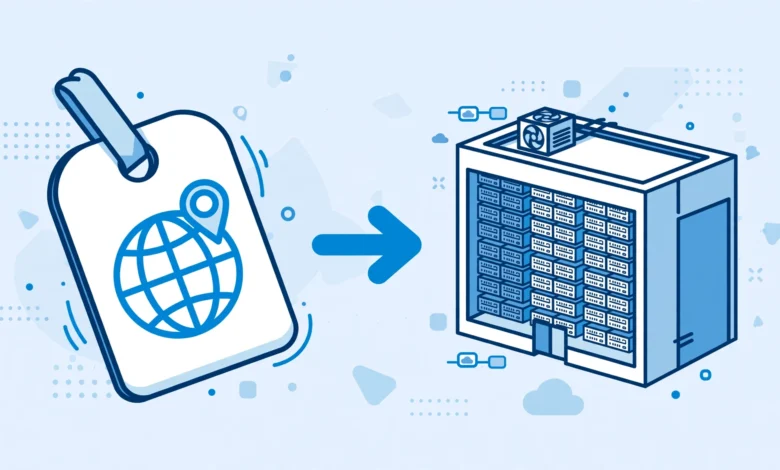
Think of a website like a house. The domain name is the street address of the house, like 123 Maple Street. It tells people where to find you. The web hosting is the actual house and the land it sits on. It is the physical space where everything lives. An address without a house is just an empty plot of land that nobody can visit. A house without an address exists, but nobody can find it. A website works the same way. Your domain (for example vutechgeek.com) is the address people type into their browser. Your hosting is the server computer that stores your WordPress files, images, and database, and serves them to visitors. You need both working together before anyone can open your site.
What Is a Domain Name?
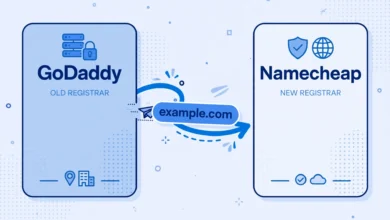
A domain name is the human-readable address of your website. Computers actually find websites using IP addresses, which are long strings of numbers like 192.0.2.44. Nobody wants to memorize those, so the domain name system (DNS) maps easy names like google.com to those numbers. When you register a domain, you are renting the exclusive right to use that name for a period of time, usually one year at a time, renewable for as long as you want to keep it. A domain has two main parts: the name itself (vutechgeek) and the extension (.com), also called the top-level domain. Common extensions include .com, .net, .org, and country extensions like .pk or .uk. For most projects, a .com is still the safest choice because visitors trust it and remember it. You register domains through a domain registrar, which is a company accredited to sell them. Registrars also handle domain management tasks like transfers, which is why you may find our guide on transferring a domain from GoDaddy to Namecheap useful if you ever want to switch registrars.
What Is Web Hosting?
Web hosting is rented space on a powerful computer called a server that is always connected to the internet. Your website is really just a collection of files: WordPress core files, your theme, your plugins, your images, and a database holding your posts and settings. Those files have to live somewhere that is online 24 hours a day, and that somewhere is a hosting server. When a visitor types your domain into their browser, the request travels to your hosting server, the server assembles your page from those files, and sends it back to the visitor’s browser. Without hosting, your domain points at nothing and visitors see an error page. Hosting comes in different types and price tiers, from cheap shared hosting that is perfect for beginners to powerful cloud and dedicated servers for big sites. Our web hosting pillar guide breaks down every hosting type in detail and helps you pick the right plan for your first site.
Domain vs Hosting: Side-by-Side Comparison
- Purpose: a domain is the address people use to find your site; hosting is the storage space where your site’s files live.
- What you get: a domain gives you the right to use a name like
example.com; hosting gives you server space, bandwidth, email accounts, and usually a control panel. - Typical cost: a
.comdomain costs roughly $10 to $15 per year; shared hosting costs roughly $3 to $10 per month. They are billed separately even when bought from the same company. - Renewal: both expire. Domains typically renew yearly, hosting renews monthly or yearly depending on your plan. If either one expires, your site goes down.
- Can you move it: yes to both. You can transfer a domain to a different registrar, and you can migrate your site files to a different hosting company, independently of each other.
Why Do You Need Both?
Because each one solves only half the problem. A domain without hosting is like printing business cards with an address for a shop that was never built. Visitors who type your domain will reach a dead end, usually a registrar parking page full of ads. Hosting without a domain is like a shop hidden down an unmarked alley. The site technically exists on the server, but the only way to reach it is through a raw IP address or a temporary server URL that nobody will remember or trust. When you connect the two by pointing your domain’s DNS records at your hosting server, everything clicks into place: visitors type your memorable domain name, DNS routes them to your server, and your server delivers your website. That connection, made through nameserver or A-record settings at your registrar, is the single technical step that joins the address to the house.
Should You Buy Domain and Hosting Together or Separately?
Most hosting companies will sell you a domain during signup, and many throw in a free domain for the first year. Buying together is convenient: the DNS is configured for you automatically, there is one bill, and one support team to call. For a first website, that convenience is genuinely worth it. Buying separately has advantages too. Domain registrars that specialize in domains often charge lower renewal prices than hosting companies, and keeping your domain at an independent registrar means your domain stays safe if you ever have a billing dispute with your host or want to switch hosts quickly. There is no technical penalty for buying separately; you just point the domain to your host with nameservers, which takes about five minutes. My recommendation for beginners: grab the free first-year domain with your hosting plan to keep things simple, then decide at renewal time whether to move the domain to a dedicated registrar for cheaper long-term pricing. Either way, enable domain privacy protection so your personal contact details stay hidden from the public WHOIS database.
What Happens If Your Domain or Hosting Expires?
If your hosting expires, your website files become unreachable and visitors see an error or a suspension page. Your domain still exists, but it points at a server that no longer serves your site. Most hosts keep your files for a grace period of a few days to a few weeks, so renewing quickly usually restores everything. If your domain expires, your site also goes down, but for a different reason: the address stops resolving, so browsers cannot find your server at all. Domains typically enter a grace period of about 30 days where you can renew at the normal price, followed by a redemption period where recovery costs a large fee, and finally the domain is released for anyone else to register. Losing a domain to someone else is far worse than a hosting lapse, because your brand address is gone. Set both to auto-renew and keep your payment method current. That one habit prevents the most painful beginner disaster there is.
If you want to understand what a host actually needs to run WordPress well, the official WordPress hosting requirements on wordpress.org list the exact PHP, MySQL, and HTTPS versions any good host should support.
Frequently Asked Questions
Can I build a website with just a domain and no hosting?
No. A domain is only an address. Without hosting there is no server to store your files and no website for visitors to see. You need both before your site can go live.
Is a domain name the same as a website?
No. The domain is just the address. The website is the actual content, design, and functionality living on your hosting server. One domain can even point to different websites over time if you rebuild or move.
Do I own my domain name forever once I buy it?
No, domain registration is a rental, not a purchase. You register it for one or more years and must renew it to keep it. As long as you keep renewing, nobody else can take it.
Can I change hosting companies but keep my domain?
Yes. Your domain and hosting are independent. You can move your site files to a new host and simply update your domain’s DNS to point at the new server. Visitors will never notice the change.
Last updated: October 2026.