What Content Batching Actually Means
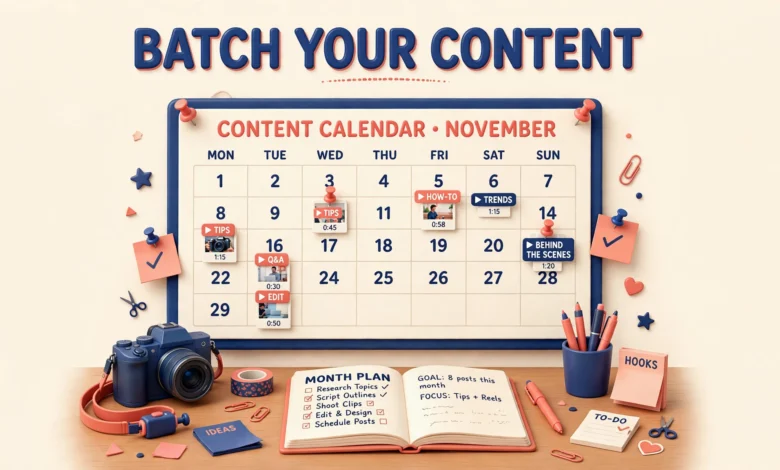
Content batching is the habit of doing similar tasks together instead of creating one post from start to finish every day. You do not brainstorm, write, film, edit, caption, and publish in one exhausting session. You split the work into stages and finish each stage in one focused block. One block for ideas, one block for scripts, one block for filming, one block for editing, and one block for captions and scheduling.
This matters most for small creators. You probably do not have a team, a studio, or eight free hours a day. You may have a job, studies, or client work. When every post requires a fresh burst of motivation, posting becomes fragile. One busy week breaks the streak, the algorithm notices the gap, and starting again feels harder than it should.
Batching does not make you post more for the sake of posting more. It makes posting sustainable. It protects your creative energy, reduces decision fatigue, and gives you a buffer for the days when life gets in the way. If you want a consistent presence, a system beats willpower every time. That is why batching pairs so well with a structured plan like this 30 day Instagram growth plan, which works best when the content is already ready before the month begins.
Batch by Stage, Not by Post
The most common batching mistake is trying to finish five complete posts in one sitting. That is not batching. That is just a long, tiring day of content creation. You switch between writing, filming, editing, and captioning, and each switch costs focus. By post three, your ideas get weaker and your energy drops.
Batching by stage works differently. Your brain stays in one mode at a time. When you write, you only write. When you film, you only film. You set up your camera once and record several videos back to back. You open your editing app once and edit several clips in a row. This is faster, and the quality stays more consistent because you are not constantly resetting your tools and your mindset.
Here are the six stages most small creators need:
- Ideas: collect topics, hooks, questions from comments, and trends worth testing.
- Scripts: turn the best ideas into short outlines or full scripts.
- Filming: record all the videos in one session, in the same location and lighting.
- Editing: cut, caption, and polish the clips in one editing block.
- Captions: write captions, calls to action, and hashtags for the whole batch.
- Scheduling: schedule everything, then leave room for reactive posts.
You do not need fancy software for this. A notes app, a spreadsheet, or a tool like Notion is enough to hold your idea bank and your batch pipeline. The system matters far more than the tool.
Start With an Idea Bank
Every batch starts before batch day. Keep an idea bank that you add to all week. Whenever a follower asks a question, save it. Whenever you notice a mistake beginners make, save it. Whenever a post performs well, save three variations of it. Whenever you learn something useful, save it as a teaching idea.
A useful idea bank has more than titles. For each idea, note the hook, the main point, and the format. The hook is the first line that stops the scroll. The main point is the one thing the viewer should learn or feel. The format is whether it works best as a talking head video, a screen recording, a carousel, or a story. When batch day arrives, you never stare at a blank page. You pick from a list you already built.
Sort ideas into three groups: evergreen, timely, and experimental. Evergreen ideas stay useful for months, like tutorials and common mistakes. Timely ideas depend on a trend or news event and must go out fast. Experimental ideas are new formats or opinions you want to test. A healthy batch is mostly evergreen, with a small number of timely and experimental posts mixed in.
The One Day Batching System
If you only have one free day a week, you can still batch a full week of content. The key is to keep the scope realistic. Aim for five short videos, not fifteen. A realistic one day plan looks like this.
- Morning, 60 minutes: pick five ideas from your idea bank and write short scripts or bullet outlines for each.
- Late morning, 90 minutes: film all five videos in one session. Use the same setup, change only your shirt or background detail if you want variety.
- Afternoon, 90 minutes: edit two or three videos fully, and rough cut the rest if time runs short.
- Evening, 45 minutes: write captions, add hooks in text form, and schedule the finished posts.
On filming day, strong hooks matter more than perfect production. If you need help with openings, study proven patterns in this guide to Instagram Reels hooks that stop the scroll before you record, so your batch starts with scroll stopping first lines instead of weak introductions you will regret later.
The One Week Batching System
If you can spread the work across a week, the system gets even easier. Give each day one job. Monday is ideas and scripts. Tuesday is filming. Wednesday is editing. Thursday is captions and scheduling. Friday is engagement, replies, and one reactive post based on what happened that week.
This version suits creators who post daily or who make longer videos. It also suits people who get tired after two hours of filming. You never need a heroic eight hour session. You need five focused sessions of one to two hours each, which is far easier to protect in a normal schedule.
The 80 Percent Batched, 20 Percent Reactive Rule
A fully batched feed can feel robotic. A fully spontaneous feed burns you out. The balance that works for most small creators is 80 percent batched and 20 percent reactive. The batched 80 percent keeps you consistent. The reactive 20 percent keeps you human, current, and connected to your audience.
Reactive posts include replies to comments, quick reactions to a trend, behind the scenes clips, and answers to questions that came up that week. You do not plan these in detail. You leave two or three empty slots in your schedule each week and fill them with whatever is genuinely happening. This also protects you from sounding out of touch when something important happens in your niche.
Scheduling tools help here. A tool like Buffer lets you queue the batched posts and leave gaps for reactive content without posting everything manually. Even without a tool, a simple calendar with planned posts and open slots works just as well.
Build an Evergreen Buffer of Five Posts
An evergreen buffer is a small stockpile of finished posts that are always ready to publish. Aim for five. These are tutorials, tips, or stories that will still make sense next month. They are not tied to a trend, a date, or a news event.
The buffer is your safety net. When you get sick, travel, or face a busy work week, you publish from the buffer instead of going silent. When you finish a new batch, you refill the buffer first before scheduling extras. Five posts may not sound like much, but five ready posts is often the difference between a creator who posts through a hard week and one who disappears for a month.
Repurpose One Idea Across Reels, Shorts, and TikTok
Batching gets even more powerful when one idea becomes three posts. Record one strong video, then adapt it for each platform instead of creating three separate videos from scratch. Change the hook wording, adjust the caption style, and check the format requirements for each platform. The core idea stays the same, but the packaging fits where it is published.
Repurposing is not copying and pasting blindly. TikTok audiences often prefer a casual, direct tone. Instagram Reels audiences respond well to polished captions and strong visual hooks. YouTube Shorts viewers often need the value stated faster. Small tweaks to the opening line and the caption can make the same video feel native on all three platforms. For a deeper workflow, see this guide on how to repurpose TikTok videos for Reels and Shorts.
You can also turn one video into a text post, a carousel, or a short thread. A three minute tutorial can become a 30 second clip, a five slide carousel of key steps, and a caption that lists the main takeaway. One idea, four pieces of content, one batch session. That is how small creators compete with larger accounts without working four times as hard.
Honest Caveats Before You Batch Everything
Batching is a workflow, not a magic fix. If your ideas are weak, batching just helps you publish weak ideas faster. Spend real time on the idea bank and on hooks. A batch of average content posted consistently will still underperform one genuinely useful post. Consistency helps good content reach more people. It does not rescue content nobody wanted.
Overbatching is a real burnout risk. Filming ten videos in one day sounds productive, but your voice gets tired, your delivery flattens, and the last videos look exhausted. If you notice quality dropping halfway through a session, stop. A smaller batch done well beats a large batch you are too tired to edit.
Stale news is another risk. Batched posts about trends, tools, or platform features can go out of date before they publish. Keep time sensitive posts out of long batches, or schedule them within a few days of creation. Evergreen topics are safe to batch weeks ahead. News, trends, and platform updates are not.
Finally, batching should free your time for engagement, not replace it. Replying to comments, answering messages, and talking with your audience is still part of growth. A creator who posts daily but never replies will grow slower than a creator who posts three times a week and actually talks to people.
Conclusion
Start small. Build an idea bank this week, pick five ideas, and run one stage based batch. Film in one session, edit in another, and schedule the results with two reactive slots left open. Keep five evergreen posts in reserve and repurpose your best idea across platforms.
Frequently Asked Questions
How many posts should I batch at once?
Start with five short videos or posts for one week. That is enough to feel the benefit without exhausting yourself. Once the workflow feels easy, you can increase to ten, but only if quality stays consistent through the whole session.
How far ahead should I schedule batched content?
Evergreen content can be scheduled two to four weeks ahead without problems. Timely content about trends or platform news should go out within a few days. If a batched post starts to feel outdated, update it or replace it from your evergreen buffer instead of publishing it anyway.
Does batching make content feel less authentic?
It can, if you batch everything and never post anything spontaneous. That is why the 80 percent batched and 20 percent reactive rule matters. Your scheduled posts keep you consistent, while your reactive posts show your real reactions, behind the scenes moments, and replies to your audience.
What if I run out of ideas for my idea bank?
Go back to your audience. Read comments, messages, and questions on your past posts. Check what beginners in your niche struggle with, and turn each struggle into a teaching idea. One good comment thread can often supply five or more ideas for your next batch.
Last updated: October 2026.