

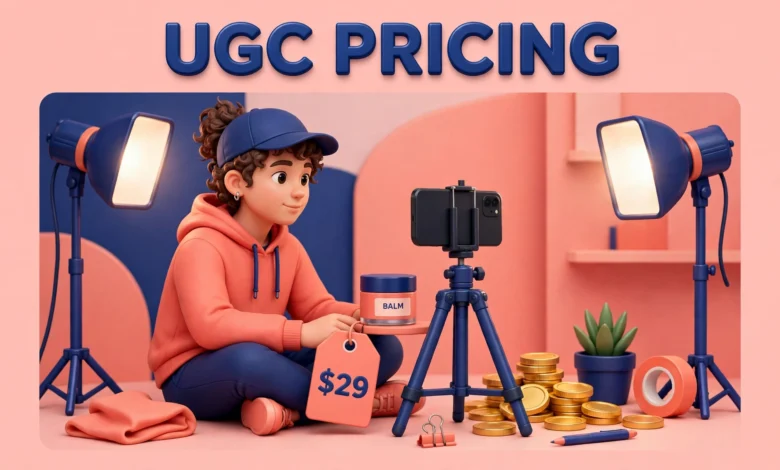
If you are a small creator, UGC rate screenshots probably make no sense to you. One creator charges $150 for a video. Another charges $1,500 for what looks like the same video. Neither is lying. UGC pricing is not about follower count or how fancy the video looks. It is about what the brand is allowed to do with the content, for how long, and where. Once you understand that, pricing stops feeling like guesswork.
UGC stands for user generated content. A brand pays you to create photos or videos featuring its product, usually in a natural, customer style rather than a polished commercial style. The brand then uses that content in its own ads, on its social channels, or on its website. Crucially, you are not paid because you post it to your own audience. You are paid because you made the content. That is why creators with a few hundred followers can land UGC deals. The deliverable is the product, not your audience.
What Is UGC Pricing, Really?
Most beginners price UGC the way influencers price sponsored posts: by follower count. That is the first mistake. A brand buying UGC is not buying your reach. It is buying content it can run as an ad. A video that converts well in paid ads can be worth far more than a video posted to 50,000 people who never buy anything.
Think of UGC pricing as two separate charges. The first is the base fee for creating the content: your time, filming, editing, and ideas. The second is for usage: how the brand may use the content, for how long, and on which channels. Beginners usually quote only the first charge and give away the second for free. That is how a $150 video ends up running as a paid ad for six months, earning the brand far more than the creator was paid. Keep the two charges separate in every quote.
You do not need a large audience to pitch UGC, but you do need a few strong sample videos. Three good samples beat thirty average ones. If you are still building your posting habit, start with our grow on Instagram in 30 days plan first.
What Should Beginners Charge for UGC in 2026?
There is no official UGC rate card, so treat every number below as a realistic beginner range for direct brand deals, not a promise. Prices are usually quoted in US dollars, and direct brand deals normally pay more than platform marketplaces, which take a cut and compete on price. Use the low end when brand new, and move up once you have a few paid projects.
- One short form video (30 to 60 seconds, edited, with captions): $150 to $300.
- One testimonial video (30 seconds, lightly edited): $100 to $200.
- Photo bundle (3 to 5 lifestyle photos): $100 to $200.
- Video plus photo bundle (one video plus 3 photos): $250 to $450.
- Three video bundle (same product, different hooks): $350 to $750.
Those prices cover creation plus organic use only: the brand can post the content on its own channels and website, but not run it as a paid ad. Paid ad usage is charged separately. Niche matters too. A skincare video that needs a visible routine and careful claims language takes longer than a simple unboxing, so beauty, tech, and food creators often charge toward the top of the range. Region matters as well: brands in the US, UK, and EU usually have larger budgets than brands in smaller markets. Never accept a rate below the value of your time because a brand says your region is cheaper.
Which Add-Ons Change the Price Most?
- Usage rights for paid ads: the biggest price driver, typically 50 to 100 percent of the base fee per month. A video with 3 months of paid ad rights can easily cost double the base fee.
- Whitelisting: lets the brand run ads from your account. Charge 50 to 100 percent of the base fee per month, with a clear end date.
- Raw footage: unedited clips the brand can cut into its own ads. Charge 30 to 50 percent of the base fee.
- Extra hooks: additional opening lines or shots for ad testing. Charge $25 to $75 per extra hook.
- Revisions: include one or two small revision rounds in the base fee, then charge $25 to $50 per extra round.
- Rush fee: for 48 hour delivery instead of a normal 5 to 7 days, add 25 to 50 percent to the base fee.
- Exclusivity: if a brand asks you not to work with competitors for a set period, charge 25 to 50 percent of the base fee per month, limited to direct competitors.
One more warning: never grant unlimited, perpetual usage in a beginner quote. It means the brand can run your video as an ad forever, everywhere, without paying you again. That is the single most expensive thing you own as a UGC creator. Always set a time limit, a channel list, and a renewal price. If the ad performs well, the brand can renew, and that means your content worked.
How Do You Build a Simple Rate Card?
A rate card is a one page list of your deliverables and prices. Keep it short: base deliverables, usage rates, and most common add-ons. Clarity matters more than format.
Use this formula for every quote: total price equals base fee plus usage fee plus add-ons. Write the three lines separately, every time. A quote that reads “Video: $200, Paid ad usage 3 months: $200, Raw footage: $75, Total: $475” beats a single unexplained number, because the brand can see what each part buys. It also protects you if the brand later asks to extend usage.
Worked example: a skincare brand asks for one 45 second video with 3 months of paid ad usage, plus raw footage for a second cut. As a beginner you pick the lower half of the range. Base fee: $200. Paid ad usage for 3 months at 100 percent of the base fee: $200. Raw footage at 40 percent: $80. Total: $480. If the brand’s budget is lower, reduce the scope, for example by offering 1 month of usage instead of 3, or dropping the raw footage. Do not negotiate by quietly giving away usage rights for free. Reduce the deliverable, not the value of your rights.
Revisit your rate card every few months and raise it in small steps. Our guide on how to get brand deals with small followers covers pitching and negotiation in more detail.
How Should You Quote a Brand?
Quoting follows a simple structure. First, restate the deliverables: one 45 second video, two hooks, delivery in 7 days. Second, list each price line separately: base fee, usage fee, add-ons. Third, state the usage terms: channels, duration, and renewal price. Fourth, state your revision policy and timeline. Fifth, state your payment terms, usually 50 percent upfront for new clients.
Two habits protect beginners more than any rate number. First, never say “my rate is flexible” without a floor in mind. Decide your minimum price before you reply, and if a brand offers below it, decline politely or reduce the scope. Second, get the usage terms in writing before you film. A brief email confirming deliverables, usage, and total price is enough. Verbal agreements about ad usage are where most disputes start.
Never accept product only payment for ad creative. A free product is not payment for content a brand will run as a paid ad. If the content has commercial value to the brand, it has a cash price. For a first project with a new brand, ask for a deposit before filming. Legitimate brands expect this.
When Should You Raise Your Rates?
Raise your rates when the evidence supports it. Raise your base fee when you have consistent paid work, when brands rebook you, or when a brand wants to renew usage on a video that performed well. Renewal is the clearest signal: if a brand wants to keep running your video, that video earned its price.
Raise rates in small steps, not big jumps. A $25 to $50 increase on your base video fee is easy for returning brands to accept. Announce the change simply: “My updated rate for one video is $250” is a complete sentence. Brands that value your work will accept it. Brands that only wanted the cheapest option will leave, and that is useful information, not a loss. Also raise your rate when the work gets harder: a video needing a script, multiple locations, or strict compliance language is not the same job as a simple product demo.
What Honest Caveats Should Beginners Know?
First, rates vary widely by niche and region, and the ranges in this guide are starting points, not a market standard. Second, platforms and marketplaces usually pay less than direct clients. A marketplace may offer a fixed $75 per video with full usage included, while the same video sold directly could earn three times as much. Marketplaces are fine for practice, but they should not set your long term price.
Third, UGC income is irregular: brands hire in campaigns, so a strong month can be followed by a quiet one. Fourth, the work takes longer than the final video suggests: a 45 second video can take two to three hours with scripting, filming, retakes, editing, captions, and revisions. Price for the whole job, not just the seconds on screen. Finally, if a brand wants you to post the video to your own audience as well, that is a separate sponsored post with a separate price.
How Do You Spot UGC Scams?
The scam warning is simple and absolute: never pay to join a platform, an agency, or a UGC program. Legitimate brands and platforms make money from their clients, not from creators. Any fee described as a registration fee, a training fee, a starter kit, or a refundable deposit is a scam, however small the amount. Real agencies take a commission from work you actually do.
Other warning signs include recruiters who operate only through anonymous messaging accounts with no verifiable company website, and offers that pressure you to accept within hours. As a rule, never accept unpaid “exposure” work for ad creative. A brand that plans to run your video as a paid ad already has a budget. See also Instagram for Creators and TikTok.
Frequently Asked Questions
How much should a beginner charge for one UGC video?
A realistic beginner range for one edited short form video is $150 to $300 for creation plus organic use only, with paid ad usage charged separately. Simpler testimonial videos sit around $100 to $200. Treat these as starting ranges, not guarantees.
Should I include paid ad usage in my base UGC price?
No. Always quote usage rights as a separate line with a clear duration and channel list. Including paid ad usage in the base fee means the brand can run your video as an ad indefinitely for the price of a single video. Separate lines also make renewals easy.
Can I do UGC with a small following?
Yes. UGC is paid per deliverable, not per follower, because the brand uses the content on its own channels. What matters is a small portfolio of clean, natural product videos. Three strong samples are usually enough to start pitching.
Is product only payment ever acceptable for UGC?
Almost never for ad creative. If a brand will run your content as a paid ad, it has a budget and should pay cash. Product only deals can make sense for a genuine review on your own channel, but that is a different job from UGC. Never accept product only pay for commercial content, and never pay a fee to join a platform or agency.
Last updated: October 2026.