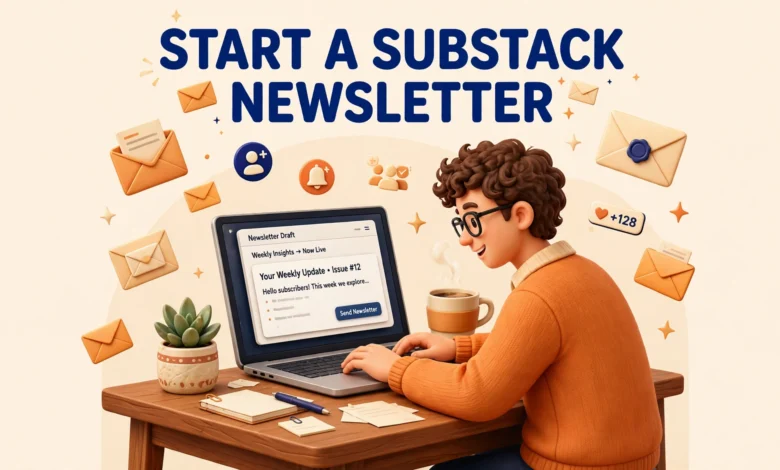
Substack is one of the simplest ways for a creator to start a newsletter in 2026. You do not need a website, a mailing list tool, or a payment setup. You sign up, pick a name, write your first issue, and send it. The platform handles delivery, archives, and payments for you.
This guide shows you how to start a Substack newsletter as a creator in 2026: the setup, the first issue, the road to your first 100 subscribers, and how paid subscriptions actually work. The honest version is included too. Most newsletters stay small, paid conversion is low, and Substack takes a real cut of your revenue. But if you pick a clear niche and publish every week, a newsletter is one of the few creator assets you truly own.
What Is Substack and Why Do Creators Use It?
Substack combines three things in one place: an email newsletter, a blog where every issue is archived and searchable, and Notes, a short-form social feed inside the Substack app. Readers can find you through search, through Notes, or through recommendations from other writers.
The platform is big now. Substack has about 50 million monthly active subscribers and around 5 million paid subscriptions as of 2025, with around 1.8 million active creators in 2026. That scale means readers are already on the platform, but it also means competition is real. A newsletter about everything will get lost. One about a single clear topic, written for one clear reader, has a chance.
The other reason creators choose Substack is ownership. Your subscriber list is yours and you can export it at any time. Social media followers are rented: an algorithm change can cut your reach overnight, but an email list goes straight to the inbox of people who chose to hear from you. Our guide to grow a newsletter as a creator in 2026 explains why that ownership is the foundation of a creator business, whichever platform you publish on.
How Much Does Substack Cost?
Starting a Substack newsletter is free. There is no upfront cost and no monthly platform fee. You can publish free issues for as long as you want without paying anything. Substack only makes money when you do.
When you turn on paid subscriptions, Substack takes 10% of your paid subscription revenue, and Stripe takes processing fees of about 2.9% plus $0.30 per transaction. On a $10 monthly subscription, you keep roughly $8.40 after both cuts. Factor that slice into your pricing from the start. You can check current fee details on the Stripe site and on Substack itself before you set a price.
Most paid newsletters charge $5 to $10 per month, or about $50 per year. A yearly option is worth offering because it locks in a reader for twelve months and reduces the monthly churn that eats small newsletters alive. Do not price at the top of the range on day one. Your first job is to prove the free newsletter is worth reading.
How Do You Set Up Your Substack Publication?
Setup takes about half an hour. Go to Substack, create an account, and pick a publication name. Then choose your subdomain, which will look like yourname.substack.com. Use your own name or your newsletter name, because it is hard to change later and it is what readers will remember.
- Pick a name that says what the newsletter is about, not just a clever word. A reader should understand the topic in five seconds.
- Use your own name as the subdomain when your name is the brand. Use the newsletter name when the topic is the brand.
- Write a one sentence tagline that promises a specific benefit, such as “One practical email a week on growing a small YouTube channel.”
- Upload a simple profile photo and a clean header image. A clear photo and readable text are enough.
- Set up your About page on day one. New readers check it before they subscribe, so say who you are, what you write about, and how often you publish.
You can connect a custom domain later for a one-time $50 fee. That is worth doing once the newsletter is established, but it is not needed at the start. The free subdomain works fine while you are finding your voice and your first readers.
How Do You Write Your First Issue?
Your first issue should be short, honest, and useful. Aim for 500 to 1,000 words. Introduce yourself, say what readers will get each week, and deliver one genuinely helpful idea. The goal is to make the reader think, “I want the next one.”
Start with the problem your reader already has. If you write about freelance design, open with the pricing mistake most new freelancers make. If you write about cooking on a budget, open with the meal that costs less than a coffee. A strong opening earns the rest of the issue.
End every issue with one clear next step. Ask a question and invite replies, because replies teach you what readers actually care about. Link to one thing worth reading. Keep the format simple enough to repeat every week without burning out. A format you can sustain beats a brilliant one you abandon after three issues.
How Do You Get Your First 100 Subscribers?
Your first 100 subscribers are the hardest milestone. Nobody knows you yet, search has not found you, and every subscriber arrives one at a time. Most creators who quit do it in this phase, not because the newsletter is bad, but because growth feels too slow. Expect that and keep going.
Start with your warm network. Tell your friends, email your contacts, and post about the newsletter on every social account you already have. Your first 20 to 30 subscribers will come from people who already know you. Those readers will reply, share, and tell you what is working.
- Post 3 to 5 Notes per week. Notes are short posts in the Substack app feed, and they are the most overlooked discovery tool on the platform in 2026.
- Ask 10 writers in your niche for a Recommendation. Recommendations let another writer suggest your newsletter to their subscribers, and a single recommendation from a writer with a similar audience can bring dozens of subscribers.
- Share each issue on your social accounts with one useful quote from it, not just a link. People subscribe for the idea, not the announcement.
- Guest post or swap mentions with newsletters at your size. Two small newsletters recommending each other grows both faster than either growing alone.
- Add a subscribe link to your social media bios and your email signature. Small, permanent placements add up over months.
Notes deserve special attention because they are the one growth lever unique to Substack. Treat them like short posts, not ads. Share a sharp opinion, a useful tip, or a question your niche argues about. When a Note takes off, new readers land on your publication page, so keep your strongest work pinned or near the top. If social media is where your audience already lives, our guide to grow on Instagram in 30 days shows how to turn that audience into subscribers.
When Should You Turn On Paid Subscriptions?
Turn on paid subscriptions only after you have built a free audience of at least 100 to 500 subscribers. Before that, a paywall does more harm than good. It slows your growth, and there are not enough readers yet for the paid tier to earn anything meaningful. Grow first, monetize second.
When you do turn paid on, keep most of your content free. A common split is one free issue a week and one paid issue, or free issues with a paid bonus section at the end. Readers need to keep experiencing the value before they pay for more of it. If everything goes behind the paywall, your growth stops.
Be honest about paid conversion. A single-digit percent of free subscribers converting to paid is normal, even for good newsletters. With 500 free subscribers and a 5% conversion rate, that is 25 paying readers. At $5 a month, that is about $125 gross, or roughly $100 after the Substack and Stripe cuts. Real money, but not a full time income. It grows with the list, so the list is the business.
How Do You Grow Beyond 100 Subscribers?
After the first 100, growth comes from systems, not from one viral moment. Publish every week on the same day so readers build a habit around your newsletter. Weekly publishing is the most sustainable cadence. Daily burns people out, and monthly is too rare for readers to remember you.
Use the Explore page and leaderboards to find newsletters in your niche, then engage with them genuinely. Read their work, leave thoughtful comments, and build relationships with writers at your level. Recommendations flow naturally from those relationships, and one from a writer your readers trust converts far better than any ad.
Turn on the referral program under Settings, then Growth, and give subscribers a reason to share. A simple reward, such as a bonus issue or a resource pack after three referrals, turns loyal readers into a growth channel. Also ask for the share directly. A line at the end of each issue that says, “If this helped you, forward it to one person who would enjoy it,” costs nothing and works better than most creators expect.
What Mistakes Do New Substack Writers Make?
- Writing about five topics at once instead of one clear niche, so nobody knows who the newsletter is for.
- Turning on paid subscriptions with 20 subscribers, then wondering why nobody pays.
- Publishing for three weeks, seeing slow growth, and quitting before the newsletter has a chance to compound.
- Ignoring Notes and Recommendations, then wondering why a newsletter alone without promotion grows slowly.
- Copying a big writer’s voice instead of writing like themselves, which makes the newsletter forgettable.
- Never asking readers to share, subscribe, or reply, then assuming readers will do it on their own.
Substack is crowded now, with around 1.8 million active creators. A clear niche matters more than ever, and so does consistency. The newsletters that win are not always the best written ones. They are the ones that show up every week, talk to one specific reader, and use every growth tool on the platform instead of waiting to be discovered.
FAQs About Starting a Substack Newsletter
Is Substack free to start?
Yes. Starting a Substack newsletter is free, with no upfront cost and no monthly platform fee. You only pay when you earn: Substack takes 10% of paid subscription revenue, plus Stripe processing fees of about 2.9% plus $0.30 per transaction. A custom domain costs a one-time $50 if you choose to add one later.
How much can a small Substack newsletter earn?
It depends on your list size and conversion rate. Paid conversion in the single-digit percent range is normal. With 500 free subscribers and 5% converting at $5 a month, gross revenue is about $125 a month, or roughly $100 after the Substack and Stripe cuts. Most newsletters stay small, so treat early earnings as a bonus.
How do I get my first 100 Substack subscribers?
Start with your warm network: friends, email contacts, and social followers. Then post 3 to 5 Notes per week in the Substack app feed, ask around 10 writers in your niche for a Recommendation, and share each issue on your social accounts with a useful quote from it. The first 100 are the hardest, and most will come from direct outreach rather than search.
Can I export my Substack subscriber list?
Yes. Your subscriber list is yours and you can export it at any time. That ownership is one of the main reasons creators choose Substack over a purely social platform, where your audience can disappear with an algorithm change. Keep a regular export as a backup.
Last updated: November 2026.