

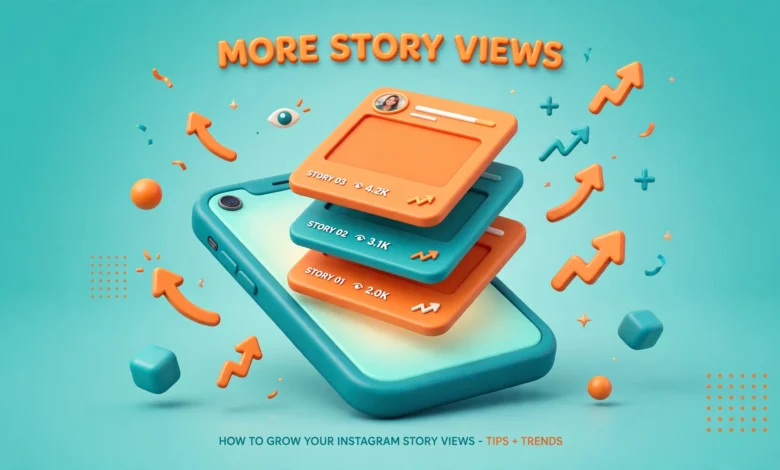
You post a Story and 90 people watch it. The next day only 30 do. You changed nothing, or so you think, and now you are scrolling advice threads wondering if you are shadowbanned.
Take a breath. Story views are some of the most volatile numbers on Instagram, and they drop for ordinary reasons far more often than sinister ones. Stories work very differently from Reels, and most of the advice floating around treats them like the same thing. They are not. This guide explains how Story ranking actually works in 2026, which tactics genuinely move the needle, and which popular tricks are myths or actively harmful.
One thing to understand first: Stories are for your existing audience, not for growth. A Story cannot reach people who do not follow you (with rare exceptions like location stickers on the public map). Every view comes from a follower, and the ranking decides which followers see your Story first. So this guide is about keeping your current followers watching, not about finding new ones. For new follower growth, read our guide on how the Instagram Reels algorithm works in 2026 instead.
How does Instagram decide who sees your Stories?
Every follower sees your Story in a slightly different order. Instagram predicts how likely each follower is to engage with your Story and puts yours near the front of their Story tray if the prediction is strong. Every signal behind that prediction is about the history between you and that specific viewer.
The three signals that matter most are viewing history, engagement history, and overall closeness. If someone watches your Stories to the end, taps your polls, and DMs you regularly, Instagram learns the relationship is active and shows them your Stories first. If someone never opens your Stories at all, you slide further back in their tray until you effectively disappear from it. That is the whole game: relationships, one follower at a time.
This is also why Story views sink when your overall engagement sinks. If a follower stops liking your Reels and posts, Instagram gets fewer closeness signals from them, and your Stories slide down their tray too. Your Story views are a mirror of your overall relationship with your audience, not a number you can hack with one clever setting.
Which stickers actually move the needle?
Interactive stickers turn a passive viewer into an active participant, and every tap is a fresh engagement signal. But the honest caveat first: fixed sticker rankings (“polls are number 1, quizzes are number 3”) are guesses by creators, not documented rules. Instagram has never published a sticker power list, so treat anyone selling you one with healthy skepticism.
With that said, here is what works in practice for each sticker type:
- Polls: two taps, zero effort, high participation. Ask questions with a genuine opinion split. “Coffee or chai for morning shoots?” outperforms “Do you like coffee?” every time.
- Questions: fewer people answer, but each answer is gold. One good answer can become tomorrow’s Story content, which starts a loop that keeps people watching day after day.
- Quizzes: excellent for niche education. People love testing themselves, and a wrong answer makes them curious about the explanation you post next.
- Sliders (emoji slider): fun and frictionless. Use it for opinions and reactions, like how much someone loves a new design.
- Add Yours: the only sticker with real discovery potential. When someone joins your prompt, their followers can see it, so a good Add Yours theme can bring new eyes. Keep prompts broad and visual: “your desk setup” works better than “your 2026 goals.”
- Countdowns: useful for launches and events. Followers who tap for a reminder become an audience you can reliably reach on the big day.
One sticker per frame is the sweet spot. Two is the maximum before a Story starts looking like a form. Vary your sticker types across the week too, because if every Story is a poll, participation drops when people stop thinking about the question. Rotation keeps the taps coming.
What should the first frame of your Story do?
The first frame is your hook. When a follower taps your profile picture in the Story tray, they see one frame and decide in about two seconds whether to keep tapping. A plain photo with no text gives them no reason to stay. A frame that promises something specific does.
Good first frames do one of three things: they tease a payoff (“the mistake that killed my reach”), they ask something the viewer cannot resist answering, or they start a story mid action (“so I just lost a client because of this”). Write the text large, keep it under eight words, and give it room to breathe. The viewer’s decision is the same as a Reel’s opening second.
Also watch your Story tray preview. The small circle your followers see shows whatever your most recent Story frame looks like, so a strong final frame of the day works like a thumbnail that pulls people in tomorrow.
How many Stories should you post per day?
There is no documented reward or penalty for a specific Story count. No official source has ever said five Stories is the magic number or that twenty is too many. The “perfect Story count” charts that circulate every year are educated guesses dressed up as science.
What actually matters is completion rate, which is the share of viewers who watch your Story all the way through. If you post 20 frames and most people bail after frame 6, Instagram reads that as weak content. If you post 4 tight frames that everyone finishes, that is a strong signal. So the real rule is simple: post as many frames as you can make genuinely worth watching, and cut everything else.
In practice, 3 to 8 frames a day works for most creators, spread across the morning, afternoon, and evening scrolls. But the deeper rule matters more than the number: pick a rhythm you can keep. Three solid Stories every day beats fifteen for a week followed by a month of silence.
Should you reshare your own feed posts to Stories?
Almost every creator does it: publish a Reel or post, then share it to Stories with a “new post” sticker and hope for reach. Here is what Instagram’s own leadership has said about it. Mosseri has stated more than once that resharing your post to your Story does not meaningfully change its reach. Instagram judges a feed post by its own signals, and a Story reshare does not inject meaningful extra distribution.
That does not mean reshares are useless. They can notify your most loyal Story viewers that something new exists, especially followers who rarely open the main feed. But ugly reshares (a tiny shrunken post on a blank background) perform worse than native ones. If you reshare, do it rarely and make it native: zoom the preview, add real context, and give a reason to tap through. “The editing trick at 0:14 changed my whole workflow” beats a bare “new post” sticker.
How do link stickers and DM replies boost your Story views?
Two underused levers feed directly into the ranking signals described above.
First, link stickers. Every account has them now, and most creators underuse them. A link sticker gives your Story a concrete reason to exist: a resource, a tool, a sale, a post on your site. Stories with links get tapped with purpose, and purposeful taps are strong engagement. Use links sparingly, only when the destination is genuinely worth opening, and always frame them with a benefit. “The free checklist I mentioned” outperforms “link in story” every time. Our 30 day Instagram growth plan covers how to use Stories as a traffic bridge between your social audience and your own platform.
Second, replying to Story DMs. Every reply you answer back builds the exact closeness signal the ranking loves. You do not need to reply to everyone forever, but answering the first wave after each Story trains the algorithm that your Story conversations are alive. Alive conversations get shown first.
A practical habit: for every question sticker you post, reply to the best three or four answers in your next Story frame (with permission, or anonymized). The featured followers will watch your Stories religiously from now on, and everyone else gets inspired to answer next time. That loop is one of the most reliable Story view builders that exists.
Before we wrap up, a few popular tactics that are either useless or harmful. Skip all of these:
- Buying Story views. Paid view services deliver bots that inflate one number while tanking your real completion rate and engagement signals. Instagram purges fake accounts regularly, so the number evaporates and your ranking takes a hit in the process.
- Posting one frame that says “tap through for a surprise” over and over. Viewers figure out the trick in days and start skipping your circle on sight.
- Dumping twenty frames at once. Even good content loses viewers when it arrives as a wall. Spread frames across the day or trim them down.
- Muting everyone else to “boost” your own tray position. Muting other accounts changes nothing about where you appear in their tray. It is pure superstition.
- Copying a viral Story format that does not fit your niche. A dancing transition does not help a finance account. Tactics only work inside content your audience actually wants.
And the biggest trap of all: treating Story views as the goal instead of the symptom. If your views are sliding, the cause is almost always upstream: stale content, a tired niche, or a schedule you cannot keep. Fix the content relationship and the views follow. For the bigger picture, see our guide on using Instagram SEO keywords in your captions, and check Instagram’s own creator resources whenever you hear a new claim about ranking.
Frequently Asked Questions
Why did my Instagram Story views suddenly drop?
The most common reasons are ordinary, not punitive: an unusual posting time, too many frames sinking your completion rate, or weaker recent feed content dragging closeness signals down. Check whether your Reels and post engagement dropped at the same time. If everything dipped together, the cause is your overall content performance, not a Story specific penalty. Instagram’s official help center explains the available Story features if you want to verify how anything works.
Do hashtags work on Instagram Stories?
Barely. You can add up to ten hashtags per Story, but they contribute almost nothing to views because Stories are not a discovery surface. One location sticker can occasionally surface your Story on the public map for that place, but it is unreliable as a strategy. Use a hashtag on a Story only if it adds context, never as a growth tactic.
Can people who do not follow me see my Stories?
Only in rare cases. If your account is public, your Stories can appear on the public location map when you add a location sticker, and Add Yours prompts can expose your Story through participants’ shares. Beyond those exceptions, Stories go to followers only. For finding new followers, Reels are the tool for the job.
Is it better to post Stories in the morning or at night?
Post when your followers are awake and scrolling. Check your Insights under audience activity for their most active hours, then place your key frames in those windows. Spread 3 to 8 frames across the morning, lunch, and evening scrolls, and watch completion rates for two weeks before locking in a schedule.
Last updated: October 2026.