

“How to go viral on Instagram Reels” is probably the most searched phrase in the creator world, and also the most lied about. Every week a new guru sells a “viral formula” that worked exactly once, on their own account, in 2022, before the algorithm changed three times. Here is the version nobody sells: virality is real, small accounts hit it every single day, but it cannot be manufactured on demand. What you can do is stack the odds heavily in your favor. That is what this guide is about.
We will cover what going viral actually means in 2026 (it is not what you think), the ranking signals the algorithm genuinely rewards, the anatomy of a high performing Reel, and the honest caveats nobody puts in the thumbnail. No engagement pods. No “post at 3 AM” superstitions. No hacks that get your reach throttled. If you are starting from a small account, pair this with our 30 day Instagram growth plan, which covers the foundations this guide builds on.
First, reset your definition. Virality is relative to account size. A 10,000 view Reel from a 500 follower account is far more viral than a 100,000 view Reel from a 100,000 follower account. The first reached twenty times its audience. The second barely reached its own followers. Most creators chasing “viral” are actually chasing a feeling, not a number. The useful target is mini viral: a Reel that reaches 10 to 50 times your follower count. Hit that a few times and your account transforms.
What Does Going Viral Actually Mean in 2026?
In 2026, Instagram discovery is almost entirely interest based. The Reels tab mostly shows content from accounts you do not follow, matched to what you have watched before. A Reel “goes viral” when the algorithm keeps expanding its audience beyond your followers because the engagement signals stay strong at each new tier.
Think of distribution in tiers. Your followers see it first, then people with similar interests, then broader lookalike audiences. At each tier the algorithm asks one question: are people still watching, sharing, and commenting? If yes, the audience expands again. If the signals decay, distribution stops. This is why a big account’s Reel can stall at 50,000 views while a tiny account’s Reel climbs past 500,000. The algorithm cares far less about your follower count than most creators assume.
Honest caveat: survivorship bias poisons nearly every viral success story you see. For every “I gained 20,000 followers from one Reel” post, there are thousands of nearly identical Reels that stalled at 400 views and were never talked about. The tactics below raise your hit rate. They do not guarantee a hit. Anyone who promises otherwise is selling something, usually a course.
Why Does the Hook Matter More Than the Edit?
The first one to three seconds decide everything. Instagram measures how many viewers swipe away immediately, and a weak opening kills distribution before it starts. You can have cinema grade editing, perfect color grading, and flawless transitions, and none of it will matter if nobody stays past second two.
A good hook is not clickbait. It is a clear promise about what the viewer gets for continuing to watch. Patterns that consistently work: open with the payoff (“Here is the exact script I used to get my first client”), ask the question your viewer is already thinking (“Why do your Reels stop at 200 views?”), or start mid action with movement already on screen. Put the hook in your spoken first line and as on screen text, because most people make the stay or swipe decision with the sound off.
Run this practical test on every Reel: mute it and watch the first two seconds. If a stranger would have no idea what is coming or why they should care, rewrite the opening. Also, front load ruthlessly. Cut the “hey guys, welcome back” intro. Nobody in the Reels tab owes you an introduction. Earn the first three seconds, and the algorithm gives you a chance at the next thirty. For the full breakdown of how those first seconds feed the ranking system, see our Instagram Reels algorithm 2026 explainer.
What Ranking Signals Actually Decide Reach?
Watch time and retention are the number one ranking factor, and it is not close. Instagram wants people to stay on the app, so it promotes Reels that hold attention: high average watch time and strong completion rates. A 15 second Reel watched to the end beats a 60 second Reel abandoned after five seconds, every time. Short, dense, and rewatchable wins.
The strongest distribution signal after retention is sends per reach: how often viewers share your Reel through DMs. When someone sends your video to a friend, that is the highest trust vote your content can get, and the algorithm treats it that way. Instagram’s own creator guidance at creators.instagram.com keeps emphasizing share worthy content for exactly this reason. Ask yourself before posting: would someone send this to a friend with “this is so you” attached? If yes, you have a contender.
Then come comments, likes, and saves, roughly in that order of weight for most niches. Saves matter especially for educational content, because a saved Reel signals lasting value. Profile visits and new follows coming directly from a Reel also feed growth, which is why a clear niche helps: when a viewer lands on your profile after one good Reel and sees ten more on the same topic, the follow is easy.
What helps less than people think: trending audio. It gives a small discovery boost through the audio page, but only after the hook has already earned the watch. Putting a trending sound on a weak video changes nothing. Two more hard truths: Reels longer than three minutes are rarely pushed to non followers, so keep discovery content short, and originality is enforced. Reposted clips, watermarked downloads, and recycled compilations get buried. Instagram’s help center at help.instagram.com is explicit that original content gets priority. Film or edit your own.
- Retention and watch time: the core signal, optimize everything for it
- Sends per reach (DM shares): the strongest distribution trigger
- Comments and meaningful replies: conversation beats emoji spam
- Saves: especially powerful for tutorials and tips
- Likes: the weakest of the big signals, but still counted
- Trending audio: a small boost, only after the hook works
How Do You Build a Reel That Has a Real Shot?
Here is the practical playbook. Treat it as a checklist, not a magic spell. Run through it before you hit post, and your hit rate will climb.
- Hook in the first second, spoken and on screen, with a clear promise.
- One idea per Reel. Trying to teach five things teaches nothing.
- Design for the loop: end where you began so replays feel seamless. Replays inflate watch time beautifully.
- Add captions. A huge share of views happen on mute, and captions raise retention measurably.
- Use a trending audio early in its trend, quietly under your voiceover if it fits your niche.
- Stay in one niche for at least 60 days so the algorithm learns exactly who to show you to.
- Reply to every comment in the first hour. Early conversation velocity helps a young Reel.
- Study your own outliers. When something pops, make three variations on the same idea within a week.
Now the honest caveat about consistency: no trick replaces showing up. Most creators who “blew up overnight” had posted over a hundred Reels first. The viral one was simply the first the algorithm picked. Volume multiplied by quality is the real formula, and it is boring, which is exactly why gurus do not sell it. If you need a structured posting routine to build that volume, our 30 day Instagram growth plan lays out a day by day system you can actually follow.
When and How Often Should You Post?
Four to five Reels a week is the realistic sweet spot for most creators. Daily posting is fine if quality holds, but forced daily output usually degrades quality within two weeks, and one strong Reel beats five tired ones. The algorithm rewards consistency of schedule more than raw volume: pick a cadence you can sustain for six months, not six days.
As for the “best time to post,” it is mostly myth at small scale. Post when your audience is online (check Insights under Audience, not some guru’s infographic), and give each Reel 24 to 48 hours before judging it. Late bloomers are genuinely common: Reels can take off days later when they finally hit the right audience tier. If you are spreading effort across platforms too, our Shorts vs Reels vs TikTok comparison breaks down where your posting energy actually pays off.
What Is the Underrated Format Most Creators Ignore?
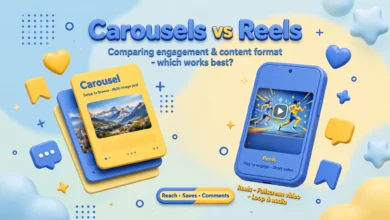
Carousels. While everyone fights over Reels, photo carousels quietly earn massive saves and shares, and Instagram now pushes them to non followers as well. A carousel version of your best Reel topic (the steps, the checklist, the before and after) will often outperform the video itself, because swiping is a low effort, high retention interaction.
Use both formats as a system instead of picking sides. Reels handle discovery and personality. Carousels handle depth and saves. Repurpose every strong Reel into a carousel the next day and you double your surface area without doubling your ideas. Creators who run this combo consistently tend to grow steadier than Reels only creators, because they are collecting two kinds of engagement instead of one.
Frequently Asked Questions
Can a brand new account with zero followers go viral?
Yes. The algorithm tests every Reel with small audiences regardless of follower count, which is why brand new accounts go viral every day. Faceless accounts do this constantly; if that style interests you, read our faceless Instagram account guide. Keep expectations realistic though: your first 20 to 30 posts are the algorithm learning your niche, so early flops are data, not failure.
Do engagement pods or bought views help?
No, and they can actively hurt. Pods deliver comments from people who never watch, which tanks your retention signals. Bought views do the same at scale: thousands of three second views tell the algorithm your content is not worth distributing. They feel productive and accomplish nothing, and aggressive manipulation risks throttling your reach. Spend that energy on a better hook instead.
Should I delete Reels that flop?
No. Deleting trains nothing and teaches you nothing. A flop today can take off next month when the algorithm retests it with a fresh audience, and your old Reels are the dataset you learn from. The only reason to remove one is if it is off brand or embarrassing. Otherwise, archive at most, and let the catalog compound.
How long does a Reel take to go viral?
Most viral Reels show clear traction within 24 to 72 hours, but late takeoffs at 7 to 14 days genuinely happen. Do not judge a Reel before 48 hours, and do not repost the same Reel repeatedly hoping for a different result. If it stalled, the hook or the idea missed. Make a sharper version with a new opening instead of recycling the same file.
Last updated: October 2026.