If you have ever opened Instagram or TikTok and wondered what to post today, you are not alone. That daily blank screen is the most common problem for new creators, and it has little to do with talent. It usually comes from having no system for deciding what your content is about.
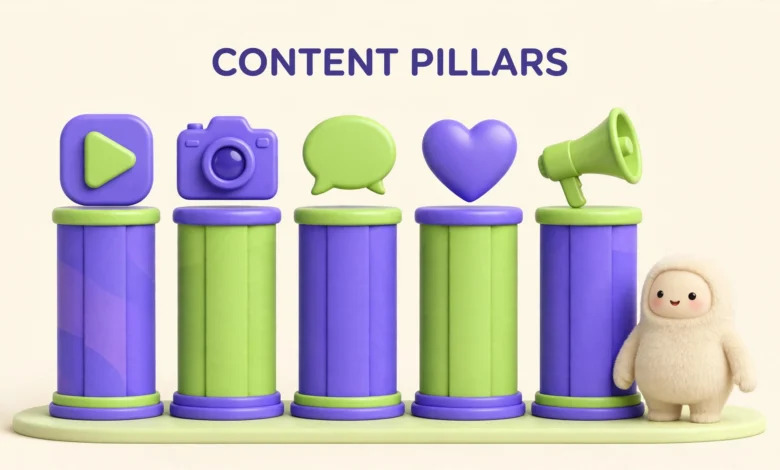
Content pillars solve that problem by giving you a small set of themes to return to again and again. This guide explains what content pillars for creators really are, the five pillar types that work for most niches, and a simple method to choose your own set in one afternoon.
What Is a Content Pillar?
A content pillar is one recurring theme that a large share of your posts fits under. Most creators work best with three to five pillars. Three gives you enough variety without spreading yourself too thin, while five gives you more room to cover different sides of your topic.
Think of pillars as shelves in a shop. A fitness coach might have shelves labeled workouts, food, mindset, and client results. A follower who likes one shelf knows what else to expect, and a new visitor can understand your page in about ten seconds.
Why Pillars Fix the What Do I Post Today Problem
Without pillars, every post starts from zero. You have to choose a subject, a format, a hook, and a call to action from scratch, and that decision fatigue is exhausting. Many creators do not quit because they lack ideas. They quit because choosing an idea every single day takes more energy than making the content itself.
Pillars also protect your consistency. With four pillars and three posts a week, you only need three ideas per pillar per month. When your content keeps returning to the same themes, followers learn what to expect and trust grows. A plan like our guide to grow on Instagram in 30 days works much better when each day has a pillar behind it.
The 5 Pillar Types That Work for Most Creators
Most successful creators use some version of the same five types, adjusted to fit their niche, voice, and audience. Learn what each type does, then decide how much weight to give it in your own mix.
1. Teach and Educate
Teaching content shows people how to do something, understand something, or avoid a mistake. It includes tutorials, quick tips, explainers, and myth busting posts. Keep the lesson specific and small enough to finish in one short video or carousel, such as how to fix knee pain during squats.
2. Show Behind the Scenes
Behind the scenes content shows the work, the process, and the person behind the polished result. It includes your workspace, your routine, and the small details that never make it into a final tutorial. You do not need to share your whole private life to use this pillar well.
3. Prove With Results and Social Proof
Proof content shows that your advice actually works. It includes client results, before and after stories, testimonials, and honest numbers from your own journey. Keep proof honest and specific, with permission where needed. Small believable wins often convert better than dramatic claims because they feel reachable.
4. Entertain and Relate
Entertainment content makes people laugh, nod, or feel understood. It includes relatable sketches, trends with your own twist, and short stories from everyday life in your niche. One or two entertaining posts per week is enough for most creators, and the humor should still fit your niche.
5. Sell and Promote
Selling content tells people clearly what you offer and how it helps them. It includes product launches, service offers, and simple calls to action. A healthy balance is about one selling post in every five to seven posts. Many creators pair this pillar with an email list, and our guide to build an email list as a creator in 2026 explains how.
How to Pick Your Own Pillars in One Afternoon
Work through the five steps below in order, write your answers down, and end the day with a draft set you can try for thirty days. The goal today is a clear starting point, not a perfect final answer.
Step 1: List the Questions Your Audience Keeps Asking
Open your comments and direct messages and write down every question that appears more than once, even if it feels basic. If you have no audience yet, use the questions you had when you started. Group similar questions together, because each group is a clue about a pillar.
Step 2: List What You Can Teach Confidently
Make a second list of your real skills, experience, and interests. Include things you have done for at least a year and topics you enjoy explaining without notes. Your pillars should sit where audience questions and your real knowledge overlap.
Step 3: Check What You Can Sustain Every Week
A pillar is only useful if you can feed it regularly. Ask how many posts you can realistically make each week and which pillars are easy for you to produce. Choose pillars that match your time, tools, and energy, not just your ambitions.
Step 4: Test Your Draft Set for 30 Days
Pick three to five pillars and commit to them for thirty days. Plan at least two posts per pillar so you have real data, not just a first impression. Track views, saves, shares, comments, and follows, plus how each post felt to make. Do not judge a pillar by one post.
Step 5: Refine, Rename, and Commit
At the end of the test, keep the pillars that performed well and felt sustainable, and drop or merge the ones that did not. Rename any pillar that feels vague, because a pillar called busy week meals is far clearer than a pillar called lifestyle. Then commit to that set for sixty to ninety days.
Example Pillar Sets for 4 Niches
These sets are starting points, not rules. Notice how each niche uses the same five pillar types in different proportions, and how each pillar name is specific enough to spark ideas.
Fitness Coach
- Teach: proper form, beginner workouts, mobility, and common mistakes
- Behind the scenes: your own training, meal prep, and coaching day
- Prove: client progress and transformations with permission
- Entertain: gym humor and relatable beginner struggles
- Sell: coaching spots, workout plans, and a free trial session
Food Creator
- Teach: quick recipes, knife skills, substitutions, and budget meals
- Behind the scenes: market trips, recipe testing, and kitchen fails
- Prove: reader recreations, taste tests, and family reactions
- Entertain: food trends, funny cooking fails, and comfort food stories
- Sell: a recipe ebook, a meal plan, or a sponsored ingredient
Tech Educator
- Teach: tutorials, shortcuts, tool comparisons, and beginner guides
- Behind the scenes: scripting, editing, desk setup, and learning in public
- Prove: student projects, job outcomes, and portfolio work
- Entertain: tech humor and relatable coding struggles
- Sell: a course, a template pack, or one to one coaching
Beauty Creator
- Teach: skincare routines, makeup techniques, and shade matching
- Behind the scenes: getting ready, product testing, and first impressions
- Prove: before and after looks, wear tests, and follower results
- Entertain: trends, get ready with me stories, and beauty fails
- Sell: favorite products, affiliate picks, and a makeup guide
A Weekly Rotation Plan You Can Copy
This plan assumes five posts a week. If you post three times a week, use the same order and stretch it across the week. If you post daily, add extra teaching or entertainment posts, not extra selling posts.
- Monday, teach: a tutorial or tip that solves one clear problem
- Tuesday, behind the scenes: a process clip or a day in your work
- Wednesday, teach or prove: a second lesson or a client story
- Thursday, entertain: a relatable post or a trend with your twist
- Friday, sell or prove: a clear offer or a case study with a call to action
Use the same rotation across Instagram, TikTok, and YouTube, but adapt the format to each platform. A teaching post might be a carousel on Instagram and a sixty second video on TikTok. Tools such as Later or Buffer can help you see the week at a glance. Our guide to content batching for creators shows a simple batching workflow that pairs well with this rotation.
Common Mistakes to Avoid
Too Many Pillars
Seven or eight pillars sound comprehensive, but they make planning harder, not easier. Each pillar gets fewer posts, so followers never learn what you stand for. If your list is too long, merge related themes and start narrow.
Only Selling, Never Helping
A feed that only promotes offers feels like a shop window with no reason to stop and look. People follow creators for value first and offers second. Keep selling to about one post in five, and let the other four prove your skill and help the reader.
Pillars That Do Not Match the Audience
Sometimes a pillar reflects what the creator loves, not what the audience needs. A tech educator might love rare tools, while the audience needs basic setup help. Check your comments and saves regularly, and adjust the pillar to match their real problems.
Copying Someone Else Pillar Set
Copying a bigger creator pillar set often fails because their audience, skills, and resources are different from yours. Build your set from your own audience questions, skills, and schedule. Our guide to create a media kit as a creator in 2026 shows how to present your pillars in one document.
How to Tell When a Pillar Needs Replacing
Pillars are not permanent. Your audience changes, your skills grow, and platforms shift, so a good set today may need an update in six months. Replace a pillar when it consistently underperforms, when you dread making content for it, or when it no longer matches the audience you serve.
Start with the numbers. If a pillar gets low saves, shares, and comments for four to six weeks while your other pillars perform normally, try three different angles inside it before you drop it. Then check your energy, test any new theme for thirty days, and drop the weakest old one when you add it.
Content pillars are a simple tool, and simple tools work when you use them consistently. Choose three to five themes that match your audience and your skills, test them for a month, plan your week around them, and replace the ones that stop working.
Frequently Asked Questions
How many content pillars should a creator have?
Most creators do well with three to five pillars. Three keeps planning simple and focused, while five gives more variety for larger niches. Start with four if you are unsure, test for thirty days, then keep, merge, or replace based on results.
Can content pillars change over time?
Yes, pillars should change as you grow. Your audience, skills, offers, and interests will shift, and your pillar set should shift with them. Review your pillars every two to three months and replace a weak pillar with a tested new theme.
Do small creators need content pillars?
Small creators often benefit the most from pillars because they have limited time and need every post to count. A clear set of themes makes planning faster, helps new visitors understand your page quickly, and prevents the random posting that slows early growth.
What is the difference between a content pillar and a content bucket?
The terms are often used in the same way, but a pillar usually means a core theme that defines your brand, while a bucket can mean a looser category for sorting ideas. What matters is having a small set of clear themes that guide your ideas and your weekly plan.
Last updated: November 2026.