Every smart chatbot, image generator, and voice assistant learned from examples that humans checked first. Someone had to label the photo, rate the answer, correct the transcript, or flag the unsafe response. That someone is often a beginner working from home, and the job title for this work is data annotator. If you have a laptop, decent English, and patience for detail, data annotation jobs for beginners can be a real way to earn online. They are not a shortcut to a full time salary, but they are a legitimate entry point into AI work, and they are worth understanding properly before you apply.
This guide explains what the work actually looks like day to day, which platforms hire beginners, what you can realistically earn, and how to pass the assessments that filter most applicants out. It also covers the honest downsides, because the ads for this kind of work usually show only the highest pay rate and hide the quiet weeks, the unpaid screening time, and the tasks that disappear without warning.
What is data annotation work exactly?
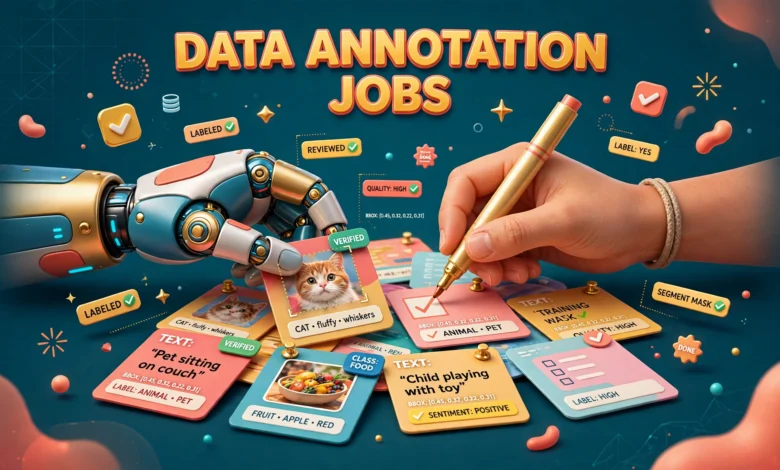
Data annotation means adding labels, ratings, or corrections to raw data so that AI systems can learn from it. A photo of a street scene might need every pedestrian, car, and traffic sign outlined. A chatbot answer might need a rating for helpfulness, accuracy, and tone. An audio clip might need a word for word transcript. In each case, your judgment becomes training material, and the quality of your judgment matters more than your speed.
Most beginners start with one of four kinds of work. Image labelling asks you to draw boxes around objects, mark points on faces or hands, or sort images into categories. Text work asks you to classify comments, check summaries, or compare two AI answers and pick the better one. Audio work asks you to transcribe speech, label the speaker, or rate how natural a voice sounds. Video work asks you to track an object across frames or describe what happens in a short clip. You do not need to do all four. Platforms usually let you qualify for one project at a time, and your accuracy on that project decides whether you keep getting work.
What types of labelling work can beginners do?
Beginner friendly work is work where the instructions are clear and the right answer can be checked. You do not need a degree in machine learning, and in many cases you do not need a degree at all. You need to read instructions carefully, follow them exactly, and stay consistent even when the task gets repetitive. The projects below are the ones new annotators most often start with.
- Image classification and bounding boxes: sorting photos and drawing boxes around named objects.
- AI response rating: comparing two chatbot answers and explaining which one is more helpful or accurate.
- Transcription and audio labelling: typing what you hear and marking speaker changes or background noise.
- Text categorization: tagging comments, reviews, or support tickets by topic, sentiment, or intent.
- Video annotation: tracking objects frame by frame or writing short descriptions of actions in clips.
Skilled work sits one level above this. It includes coding help, math problem solving, specialist language work, and detailed evaluation of long AI responses. Those projects pay more, but they also test more strictly and often require a degree, a portfolio, or proven expertise in the subject. Beginners should treat skilled rates as a goal to grow toward, not as the starting pay they should expect in week one.
Who hires beginners for data annotation in 2026?
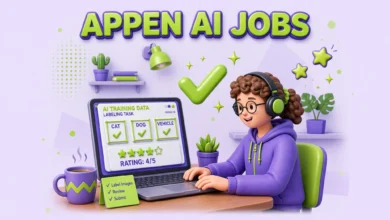
Several large platforms hire beginners on a project basis. DataAnnotation is one of the best known, and it focuses heavily on AI response rating and specialist tasks. Its assessments are strict, which is why many applicants fail at the first stage, but its pay for qualified work is among the highest in this field. Appen is older and larger, with a wide mix of search evaluation, transcription, and labelling projects across many countries and languages.
TELUS Digital, formerly Lionbridge, runs similar search and ads evaluation work. Clickworker and Toloka offer smaller microtasks that are easier to enter but pay less per task, which makes them useful for practice rather than steady income. Remoter and Mindrift are smaller platforms worth checking for specialist or language based projects. If you want a broader comparison before choosing where to apply, our guide to the best platforms for AI training jobs breaks down how these platforms differ on pay, project supply, and entry requirements.
Do not apply everywhere on the same day and hope for the best. Pick two platforms that fit your skills and time zone, complete their profiles fully, and treat each assessment like a real job test. A half finished profile or a rushed assessment is the most common reason beginners hear nothing back.
How much do data annotation jobs really pay?
Pay varies widely, and honest numbers matter more than headline numbers. Microtasks on open marketplaces often pay the equivalent of $3 to $8 per hour once you count reading instructions, waiting for tasks to load, and redoing rejected work. General labelling and rating projects usually land in the $10 to $20 per hour range for qualified contributors. Skilled work, such as coding evaluation or expert subject review, can reach $20 to $45 per hour, but only for people who pass tough screening and maintain high accuracy.
Country matters too. Some platforms pay the same rate worldwide, while others adjust by region or by project budget. Applicants in the US, UK, Canada, and Australia often see more projects and higher rates, while applicants in Pakistan, India, and other regions may see fewer openings and lower rates for the same kind of work. That gap is frustrating, but it is better to know it before you invest weeks in applications. Our breakdown of how AI training jobs pay by country gives realistic ranges by region so you can set expectations before you start.
Also remember that hourly rates only apply to time spent on paid tasks. Time spent reading guidelines, taking screening tests, waiting for project invitations, or fixing rejected work is usually unpaid. A project advertised at $20 per hour can feel like $12 per hour once all that unpaid time is counted. Track your real earnings for a full week, including the unpaid parts, before deciding whether a platform is worth your time.
How do you apply and pass the assessments?
Almost every serious platform screens applicants before giving them paid work. The screening usually includes a short qualification test, a sample task with detailed guidelines, and sometimes an identity check. The test is not checking whether you are smart in general. It is checking whether you follow instructions exactly, notice small details, and stay consistent when the examples get tricky.
- Read the full guidelines before starting, even if they look long. Most failures come from skipped rules, not lack of ability.
- Do the practice examples slowly and compare your answers with the feedback given.
- Keep your working environment quiet for audio tasks, and use a proper keyboard rather than a phone.
- Answer in the style the project asks for, not in the style you personally prefer.
- Never use AI tools to complete an assessment unless the project explicitly allows it, since that usually leads to removal.
DataAnnotation in particular is known for a demanding starter assessment, and many good applicants fail it on the first try. If that happens, treat the feedback as useful information, not as a verdict on your ability. Our detailed walkthrough on how to pass the DataAnnotation assessment in 2026 explains the test format, the common traps, and the preparation steps that give first time applicants a fair chance.
What are the honest downsides nobody mentions?
The biggest downside is feast or famine supply. One month a project offers steady tasks every day, and the next month it goes quiet with no explanation. Platforms do not guarantee hours, and they can pause or end a project at any time. That makes data annotation a poor sole income source for most beginners. It works far better as side income alongside a job, freelance work, or study, where a quiet week is disappointing rather than dangerous.
Rejection is also part of the work. Your labels can be marked wrong by a reviewer who interprets a guideline differently, and some platforms give little explanation. High rejection rates can reduce your score and your access to future tasks, which feels unfair when you followed the instructions as written. The practical response is to keep notes on edge cases, ask for clarification when a channel exists, and avoid projects where the guidelines keep changing without notice.
Finally, the work can be mentally tiring in a way that surprises beginners. Labelling hundreds of similar images or rating dozens of similar chatbot answers demands focus, and quality drops fast when you rush. Set a daily limit, take real breaks, and stop when your accuracy starts slipping. A short, careful session beats a long, sloppy one every time, both for your pay and for your standing on the platform.
How do you spot a data annotation scam?
Scams thrive in this field because the promise of easy work from home attracts people who urgently need income. The rule is simple and non negotiable: legitimate platforms never charge applicants. You should never pay a registration fee, a training fee, a deposit for equipment, or a charge to unlock higher paying tasks. Any request for payment to start work is a scam, no matter how professional the website or the recruiter looks.
Other warning signs include job offers sent through random WhatsApp messages, interviews conducted only by text chat, requests for your bank login or one time codes, and pay promises far above the market, such as $100 per hour for simple image sorting. Real platforms pay through PayPal, Payoneer, or bank transfer after verified work, and they publish their payment terms openly. If an offer feels rushed, secretive, or too generous, walk away and apply directly through the official platform website instead.
What are the most common beginner questions?
Do I need experience to start data annotation work?
No, most beginner projects do not require prior experience. They require careful reading, consistency, and a passing score on the platform assessment. Experience helps you qualify for higher paying specialist projects later, but it is not a barrier to starting.
Can data annotation replace a full time job?
For most beginners, no. Task supply is irregular and platforms offer no guaranteed hours. Treat it as side income first, and only consider relying on it once you have several months of steady earnings across more than one platform.
How long does it take to get paid work after applying?
It varies a lot. Some applicants get a project within days, while others wait weeks for an opening that matches their language, location, and skills. A complete profile, a careful assessment, and applications to two or three platforms improve your chances, but waiting is normal in this field.
Is data annotation work safe and legitimate?
Work through well known platforms is legitimate, but the field also attracts scams. Apply only through official websites, never pay to start, and never share bank logins or verification codes. If an offer asks for money upfront, it is not a real job.
Last updated: November 2026.