

TikTok affiliate marketing sounds like easy money in the videos that sell courses about it. A creator holds up a product, a link sits in the video, and sales roll in while they sleep. That version leaves out the slow start, the products that never sell, and the account rules that can shut the whole thing down. This guide covers the honest version: what TikTok Shop affiliate really is, who can join, how much small creators actually earn at first, and the mistakes that cost people their accounts.
If you are still building your audience, read our guide on how to grow on TikTok in 2026. Affiliate income follows audience trust, and a small niche account can outsell a bigger account that promotes random products.
What Is TikTok Shop Affiliate Marketing?
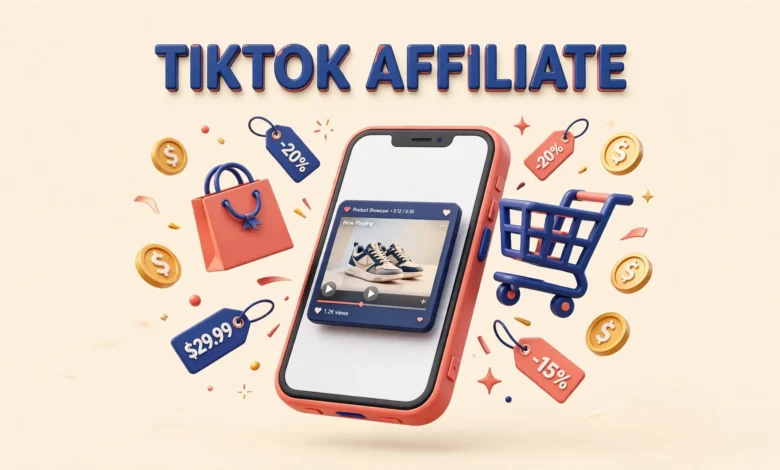
TikTok Shop affiliate marketing means you earn a commission when someone buys a product through your video, your live stream, or your showcase. You do not need your own product, warehouse, or shipping setup. The seller handles the product and delivery. You handle the part that is actually hard: convincing a stranger that the product is worth their money.
In practice, you join the affiliate program, add products to your showcase, and attach a product link when you make a video featuring that product. A viewer taps the link, buys through TikTok Shop, and you earn the commission rate the seller set. TikTok tracks the sale back to your video, so you do not need discount codes or manual reporting.
This differs from brand deals, where a company pays a flat fee to post. With affiliate marketing, you only get paid when sales happen. Brands that would never pay a small creator upfront will often let that creator earn commission on real sales. See also our guide on how to get brand deals with small followers.
Who Can Join TikTok Shop Affiliate?
The rules vary by country and change often, so treat any number in this guide as a snapshot for 2026, not a permanent promise. Always check the current requirements inside your own TikTok app before you plan around them.
In the United States, creators can generally apply at 1,000 followers, with a pilot stage until around 5,000 followers. During that stage, some features may be limited, and account standing matters more than usual. In the United Kingdom, the threshold is commonly around 500 followers. In some other markets, the minimum is lower, or sellers can invite creators through seller bound routes with no follower minimum. TikTok wants proof you are a real creator with real engagement, not a spam account created to push products.
Beyond followers, the usual requirements include being at least 18 years old, completing identity verification, and keeping your account in good standing. That means no recent serious policy violations, no misleading content history, and no bought followers. An account that grew by shortcuts will struggle here, because affiliate access is one of the first things TikTok restricts when trust is low.
How Do You Join Step by Step?
Joining is straightforward once you meet the requirements. The exact menu names shift with app updates, but the flow stays similar across markets.
- Open TikTok Studio or the Shop for creators section in your TikTok app and look for the affiliate or Shop creator option.
- Apply for the affiliate program and complete identity verification with a valid government ID where required.
- Wait for approval, then set up your showcase, which is the shop tab on your profile where viewers can browse your recommended products.
- Browse the product marketplace, filter by your niche and commission rate, and add products you genuinely want to test.
- Request free samples from sellers where available, test the product properly, and only promote what you would honestly recommend.
Do not rush the sample stage. One honest review of a product you actually used beats ten showcases of products you never opened.
How Do You Find Products That Actually Sell?
The biggest beginner mistake is picking products by commission rate alone. A 30 percent commission on a product nobody wants is worth less than a 10 percent commission on a product your audience already buys. Commission rates commonly fall in the 10 to 20 percent range for many everyday products, though rates vary widely by category, seller, and campaign. Always check the actual rate on the product page, because screenshots in guru videos are often from rare high commission campaigns.
Start with niche fit. A skincare audience trusts you on skincare, not kitchen gadgets. Before adding any product, ask: does it fit what my audience already watches me for, would I buy it myself, and can I show a real result in under 30 seconds?
Then check sales history, rating, review count, and whether the seller offers free samples. A product with steady sales and genuine reviews is safer than a new listing with a huge commission and no track record. Also check shipping and returns, because viewers will blame you when delivery goes wrong, even though you never touched the parcel.
Free samples deserve a warning too. Only request samples you actually plan to test and film. Requesting dozens of free products with no content to show for them burns seller relationships fast.
What Content Formats Actually Convert?
Videos that sell are rarely the most polished ones. They are the ones that show a real problem, a real product, and a real result, in that order. Viewers buy when they can picture themselves using the product, not when they admire your editing.
Honest Demos That Show the Product Working
Film the product doing its job, with no cuts hiding the important part. If it is a cleaning tool, show the dirty surface first, then the result. Viewers distrust videos that cut away right before the reveal.
Problem and Solution Videos
Open with the problem your audience already has, then introduce the product as the solution. A small apartment creator might open with a cluttered desk, then show one organizer that actually fixed it.
Reply Videos That Answer Real Questions
When viewers comment with questions about a product, answer them on video. Reply videos convert well because the buyer objection is already stated in the comment, and your answer removes it for every future viewer too.
LIVE Shopping Sessions
Live shopping works when you already have an audience that shows up. Use live sessions to demo products you already know sell and answer questions in real time. Build a few winning videos first, then take the proven products live.
How Much Do Small Creators Really Earn?
Here is the honest part most affiliate gurus skip. Most small creators earn little at first. Your first month might bring a handful of sales, or none at all, even if a video gets decent views. Views and sales are different things. A viral video with no buyers pays nothing in affiliate income, while a quiet video with 2,000 views and ten buyers can be the start of something real.
Think of it in simple math. A 20 dollar product at 15 percent commission earns 3 dollars per sale. Ten sales earn 30 dollars, and one hundred sales earn 300 dollars. Creators earning four figures a month usually sell higher priced products, or sell the same proven product repeatedly to a growing audience. Both take time.
That slow start is normal, not a sign that you are failing. Treat the first months as research: test products, watch which videos drive clicks, and keep notes on what sold. For a broader view of creator income, see our guide on how to make money as a small creator in 2026.
Affiliate income is uneven by nature. Some weeks will spike, others will go quiet. Do not plan your rent around it until you have several months of steady sales behind you.
What Policy Traps Should You Avoid?
Affiliate access is easy to lose and hard to regain, so the rules matter more than any growth hack. These are the traps that catch small creators most often.
- Never make misleading claims about a product. If it does not remove stains instantly, do not say it does. Exaggerated before and after results are one of the fastest routes to a violation.
- Always disclose that a link is an affiliate link where disclosure is required in your country, and say it plainly in the video or caption. Viewers respect honesty, and regulators increasingly require it.
- Avoid banned or restricted product claims, especially around health, weight loss, and medical benefits. If a product promises a health outcome, that claim needs real backing, not your enthusiasm.
- Do not use other creators’ videos, fake reviews, or stolen testimonials to sell a product. TikTok detects reused content, and sellers may also report it.
- Do not promise earnings, discounts, or results that the seller has not actually offered. A fake sale or a made up price drop will cost you trust twice: once with viewers, once with TikTok.
When in doubt, check the current rules on TikTok Support and TikTok, because policy pages update faster than any blog post can. No commission is worth an account strike.
How Do You Track Results and Scale Up?
Scaling affiliate income is less about posting more and more about posting more of what already works. After each video, check three numbers: how many viewers clicked the product link, how many bought, and which video drove the sale. TikTok Studio gives you this breakdown, and it is more useful than view count alone.
When a product sells, double down on it before chasing a new one. Make a second angle: a different problem it solves, a reply to a common question, a comparison with a cheaper alternative. One proven product with five good videos often earns more than five unproven products with one video each.
Once you have real sales to show, you can also negotiate. Sellers who see consistent results are often willing to raise your rate, send better samples, or give early access to new products. Bring sales numbers, not follower counts.
Finally, repurpose winning videos to Reels and Shorts where the same product is available, but adapt the format instead of reuploading blindly. Keep your affiliate links and disclosures correct on every platform.
Frequently Asked Questions
Can small creators really earn from TikTok Shop affiliate?
Yes, but slowly at first. Small creators earn when they pick products that fit their niche and make honest videos that show real results. Most beginners earn little in the first weeks, and steady income comes from repeating what sells, not from one viral video.
How many followers do I need for TikTok Shop affiliate?
It depends on your country. In the US, creators can generally apply at 1,000 followers, with a pilot stage until around 5,000 followers. In the UK, the threshold is commonly around 500 followers, and some markets offer seller bound routes with no minimum. Rules change often, so always confirm the current threshold inside your TikTok app.
Do I need to buy products to promote them?
No, but testing the product first is strongly recommended. Many sellers offer free samples to approved creators. If you cannot get a sample, buy the product yourself when the cost is reasonable, or skip it. Promoting products you never used risks misleading your audience and damaging your credibility.
What commission rate should I expect?
Commission rates commonly fall between 10 and 20 percent for many everyday products, but rates vary by category, seller, and campaign. Always check the rate listed on the product itself, and remember that a high rate on a product nobody buys is worth less than a modest rate on a proven seller.
Last updated: October 2026.