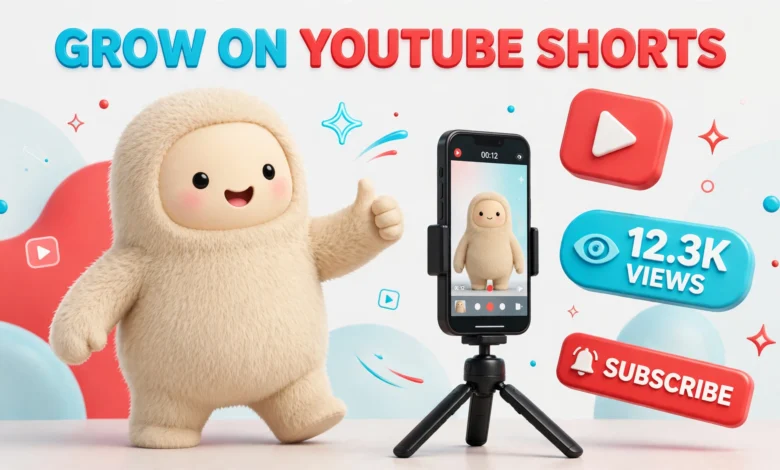
YouTube Shorts can put your face in front of thousands of strangers in a single day, even if your channel has twelve subscribers. But Shorts are also the most misunderstood format on the platform. Views come fast, subscribers come slowly, and many creators wake up with a million Shorts views and a channel that still earns nothing. This guide explains how to grow on YouTube Shorts in 2026, what the format can and cannot do for you, and how to use it without falling for the guru hype.
The honest truth first: Shorts are a discovery tool, not a business by themselves. They are brilliant at finding new people, weak at building deep loyalty, and slow at turning viewers into paying fans. Used well, they are the top of your funnel. Used badly, they become a treadmill where you post daily, collect empty views, and wonder why nothing changes. The strategy below keeps Shorts in their proper place: a fast, cheap way to test ideas and meet your audience, feeding into content that actually builds your channel.
How does the Shorts feed actually work?
The Shorts feed is a swipe machine. YouTube shows your short to a small test audience, watches what they do, and then decides whether to show it to more people. The two signals that matter most are simple: did people watch it, and did they swipe away. YouTube calls the first one “viewed” and the second one “swiped away,” and you can see both numbers in YouTube Studio for every short you publish. A short that most people watch to the end gets pushed further.
This test audience system is why a new channel can go viral on its third short. YouTube does not care how many subscribers you have when it tests a short. It cares how the first few hundred viewers react. The audience, not the creator’s reputation, decides. If you want the wider algorithm picture, our guide to the YouTube Shorts algorithm in 2026 explains the ranking signals in more detail.
Why do the first 1 to 2 seconds decide everything?
A viewer decides whether to stay or swipe in about one to two seconds. That is not an exaggeration. They have not read your caption, they have not heard your point, and they have not decided whether they like you. They have only seen a face, a movement, or a line of text, and their thumb is already moving. Your hook is the first thing they see or hear, and it must create a reason to stay. The best hooks make a promise, ask a question, or show a result, and they do it before the viewer has time to think.
- Start with the result: “I made $500 from one short video, here is how” beats a slow introduction every time.
- Ask a question your viewer already cares about: “Why does nobody watch your videos?” stops the thumb.
- Show movement in the first frame. A moving hand, a changing scene, or a quick cut signals that something is happening.
- Put the key words on screen as text, because many people watch with the sound off at first.
- Never start with “Hey guys, welcome back to my channel.” That sentence has ended more shorts than any other.
Test your hook by watching your own short with fresh eyes. If you would swipe past it, so will a stranger. Record three different openings for your best ideas and publish the strongest one. Over time you will notice which opening styles your audience responds to, and that pattern becomes your personal hook formula. The creators who grow fastest on Shorts are not the ones with the best cameras. They are the ones who learned to open well.
What is the ideal length for a YouTube Short?
The sweet spot for most Shorts in 2026 is 15 to 34 seconds. That length is long enough to deliver one complete idea and short enough that most viewers finish it. Completion rate matters enormously, because a short that 80 percent of viewers finish looks far better to YouTube than a 55 second short that only 30 percent finish. The loop is your secret weapon. A short that ends where it began can be watched two or three times before the viewer notices. Those repeat views push your average view duration above 100 percent, which is one of the strongest signals you can send. Keep the idea to one point per short. If you need two minutes to explain something, that idea belongs in a long form video, not a short.
How many Shorts should you post per week?
Three to five Shorts per week is the minimum that gives you real data. One short a week is too slow to learn anything, because each short is a small experiment and you need enough experiments to see a pattern. Your first Shorts are a testing phase, not a launch. Expect your first 20 to 30 Shorts to perform unevenly. That is normal. Treat each short as a cheap test that costs you thirty minutes, not as a make or break event. Our guide to content batching for creators shows how to record five shorts in one session so the weekly pace stays manageable.
Why does one niche beat ten niches?
Shorts reward focus. When every short you publish is about the same topic, YouTube learns who to show your content to, and viewers who like one short know exactly what they will get from the next. A channel that posts cooking tips on Monday, crypto news on Tuesday, and gym motivation on Wednesday confuses both the algorithm and the audience. Pick one niche and stay in it for at least 50 Shorts before you judge the results. Within that niche, you can vary the format: tips, mistakes, myths, quick tutorials, and reactions to common questions. That variety keeps the content fresh while the topic stays consistent. The same focus principle applies on other platforms too, as our guide to growing on TikTok in 2026 explains from the short video side.
How do you turn Shorts viewers into subscribers?
This is the hardest part of Shorts growth, and the part most guides skip. A Shorts viewer is in swipe mode, not subscribe mode. They liked your 20 second video, but that does not mean they want more from you. Converting them takes a bridge. The most reliable bridge is a related long form video. End your short with a clear next step, such as “I explain the full method in my latest video,” and link that video in the Shorts comments and description. A viewer who watches your long video is far more likely to subscribe than one who only ever sees your shorts.
- Make Shorts that tease a bigger topic, then publish the full version as a long form video the same week.
- Use a consistent series format, such as “Day 12 of growing a channel from zero,” so viewers subscribe to follow the story.
- Reply to comments on your best Shorts with a follow up short, which turns a viewer into a participant.
- Put your best long form video in your channel trailer and your featured section so new visitors find it fast.
- Ask for the subscribe once per short at most, and ask at the end after you delivered value, not at the start.
Series content deserves special attention, because it is the one Shorts format that reliably converts. A series gives viewers a reason to return, and returning viewers are the ones who subscribe. “Part 1, part 2, part 3” works, but only if each part stands alone as a good short. Nobody follows a series that wastes their time. Keep each episode useful on its own, and the series structure does the rest. For timing your posts around when your audience is actually online, our best time to post research is a useful starting point, since short video audiences behave similarly across apps.
What Shorts do NOT do for your channel?
Shorts views do not count toward the 4,000 watch hours needed for YouTube Partner Program monetization through long form content. Shorts have their own separate monetization path: 10 million Shorts views in 90 days, plus 1,000 subscribers, qualifies you for the Partner Program. That is a real path, but it is a high bar, and the ad revenue per Shorts view is far lower than long form revenue. Judge Shorts by what they are good at: reach, testing, and subscriber discovery. Judge long form by what it is good at: watch time, loyalty, and revenue. The official requirements are listed on the YouTube Help Center, and our guide to YouTube Shorts monetization requirements breaks down both paths in plain language.
How does the 14-day experiment work?
If you are stuck, run a structured 14-day experiment instead of guessing. Pick one niche, one posting time, and one format, then publish one short a day for fourteen days. Track three metrics per short: the viewed versus swiped away rate, the average view duration, and the subscriber gain. After fourteen days, keep the top three performing formats and drop the rest. That is a real strategy, and it beats a month of random posting. The key rule is to judge by patterns, not by single videos. Look for the format that performs well three or four times, not once. You can also study how other creators run their experiments on the YouTube Creators channel, which publishes official tips and case studies.
What is the honest bottom line?
Shorts are the fastest way to be discovered on YouTube, and the slowest way to build a real channel if you use them alone. Hook fast, keep it to 15 to 34 seconds, post three to five times a week, stay in one niche, and build a bridge from every good short toward a long form video or a series worth following. Track viewed versus swiped away in YouTube Studio, run a 14-day experiment when you feel stuck, and remember that your first 200 Shorts are a testing phase. Most creators who succeed on Shorts did not win on short number five. They won on short number eighty, because they kept testing while everyone else quit.
Grow on YouTube Shorts FAQs
How many Shorts should I post per week to grow?
Three to five Shorts per week is a good minimum, because each short is a test and you need enough tests to see a pattern. Daily posting can work if quality stays high, but five good shorts beat ten rushed ones. Pick a pace you can sustain for months, since consistency matters more than a short burst of volume.
Do Shorts views count toward 4,000 watch hours?
No. Shorts views do not count toward the 4,000 watch hours needed for Partner Program monetization through long form content. Shorts have a separate path: 10 million Shorts views in 90 days, plus 1,000 subscribers, qualifies you for the Partner Program. Only long form watch time counts toward the 4,000 hour requirement.
What is the best length for a YouTube Short?
The sweet spot for most Shorts is 15 to 34 seconds. That length is long enough to deliver one complete idea and short enough that most viewers finish it. A short that loops well can be watched twice, pushing average view duration above 100 percent, which is one of the strongest signals you can send to YouTube.
Why do my Shorts get views but no subscribers?
Shorts viewers are in swipe mode, not subscribe mode, so a single entertaining short rarely earns a subscription on its own. Conversion needs a bridge: a related long form video, a series worth following, or a clear next step at the end of the short. Build that bridge and your subscriber rate from Shorts will climb, even if total views stay the same.
Last updated: November 2026.