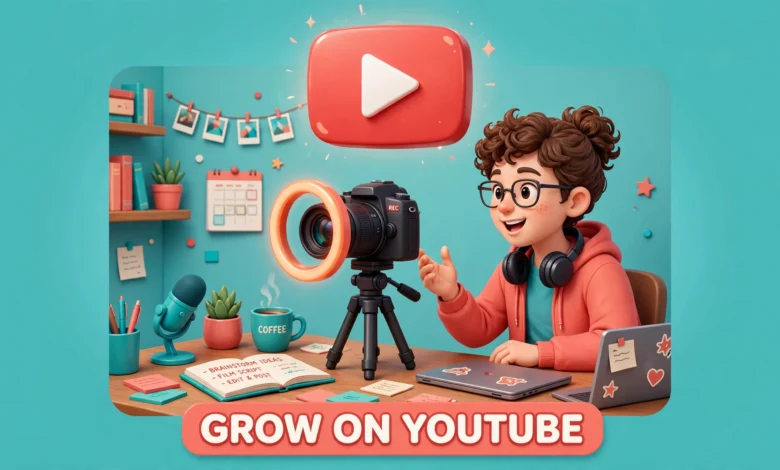
Starting a YouTube channel in 2026 feels harder than ever. Every niche looks crowded, every successful creator seems years ahead, and every growth video promises a shortcut that never quite works. The honest truth is less exciting but far more useful: small channels still grow, but they grow through clear topics, consistent publishing, and steady improvement, not through one viral video or secret trick.
This guide is for a creator starting from zero, or close to it. It covers how to pick a niche you can sustain, how to make videos people actually search for, how to write titles and hooks that earn clicks and watch time, and how Shorts should fit into a long form plan. It also sets realistic expectations, because a plan built on false promises is the fastest way to quit.
There is no guaranteed timeline here. Some channels find traction in a few months, others take a year or more. What you can control is the quality of each video, the clarity of your topic, and whether you learn from the data YouTube gives you for free.
What Does Growing From Zero Actually Look Like?
Growth from zero is slow at first, and that is normal. Your first videos are not really for an audience. They are research. They teach you how long editing takes and what topics you enjoy explaining. Most new creators improve fastest between video five and video twenty, when a repeatable process starts to appear.
Early numbers will look discouraging. A video with forty views is not a failure if those viewers watched most of it and a few subscribed. Publishing consistently gives YouTube more chances to find the right viewers.
How Do You Pick a Niche You Can Sustain?
A good niche sits at the overlap of three things: topics people search for, topics you can talk about for a year without burning out, and topics narrow enough that viewers know what to expect from you. Broad channels struggle because nobody can describe them in one sentence. A channel about “my life and tech and cooking” gives a new viewer no reason to subscribe, because the next video might be about something they do not care about at all.
Narrow does not mean tiny forever. You can start with one clear angle and widen later once viewers trust you. A channel about budget meals for students can later add kitchen gear reviews. The starting point just needs to be specific enough to attract the right first viewers.
- Write down ten video ideas before you commit to a niche. If you struggle to reach ten, the niche may be too narrow or too boring for you.
- Check whether people search for those topics. Type each idea into YouTube search and look at the suggested phrases and the view counts on smaller channels.
- Ask whether you would still enjoy topic twenty. A niche chosen only because it looks profitable becomes very hard to sustain by month four.
- Pick one audience, not three. A video for beginners and experts at the same time usually serves neither group well.
If you are also building on other platforms, the same focus helps there too. Our guide to grow on Instagram in 30 days makes a similar point: a clear topic beats posting about everything and hoping something sticks.
Why Should Your First Videos Be Search First?
New channels have no audience to browse their home page, so they should not rely on browse traffic at first. Search traffic is different. When someone types a question into YouTube, they want an answer, and they will watch a small channel if that channel answers clearly. Search first videos target real questions: how to do something, what to buy, how to fix a problem, or how to start a skill.
Finding these questions is simpler than most courses make it sound. Use YouTube autocomplete, the search suggestions that appear as you type, and the comments on popular videos in your niche, where viewers constantly ask follow up questions. Pick questions with clear intent and modest competition. If the top results are all huge channels with highly produced videos, look for a narrower version of the question where a smaller channel can still rank and be useful.
A search first video still needs personality, but its structure should serve the searcher. Answer the question early, then explain the steps and mistakes to avoid. Viewers who get a fast answer are far more likely to subscribe.
What Makes a Title and Thumbnail Work?
A title and thumbnail are a promise. The title tells the viewer what they will get, and the thumbnail makes them feel it is worth clicking. Clickbait breaks this promise, and viewers punish it by leaving early, which hurts the video more than a low click rate ever would. Aim for curiosity plus clarity: the viewer should know the topic and feel a reason to watch this video rather than another one on the same topic.
- Put the main benefit or question in the title, not a clever phrase nobody searches for.
- Keep the thumbnail to one clear subject, one short readable phrase, and strong contrast. Three small faces and ten words will not read on a phone screen.
- Make the thumbnail and title work together instead of repeating each other. If the title says the result, the thumbnail can show the reaction or the before and after.
- Test one change at a time. If you change the title, thumbnail, and topic all at once, you will never know what made the difference.
How Do You Hook a Viewer in the First 30 Seconds?
Most viewers decide within seconds whether to stay. A long channel intro, a request to subscribe before any value, or a slow story about why you made the video will lose them. Open with the outcome, the problem, or the most interesting moment, then briefly say what the video will cover. The subscribe ask can wait until you have earned it, usually after you have delivered something useful.
A strong hook is specific. “In this video I will show you three settings that fixed my blurry phone photos” beats “Welcome back to my channel, today we are talking about photography.” The first sentence tells a viewer with blurry photos that this video is for them. The second tells them nothing.
How Should Shorts Fit Into a Long Form Plan?
Shorts can help a small channel, but they should feed your long form videos rather than replace them. A useful mix for most small creators is 25 to 40 percent Shorts and the rest long form, for example one Short alongside two or three longer videos per month, or a Short that teases and links to a deeper video. Shorts bring discovery, while long form builds trust, watch time, and subscribers who actually know your work.
The trap is chasing Shorts views alone. Shorts viewers often subscribe casually and never watch a long video. Use Shorts to test hooks, repurpose the strongest moment of a long video, or answer one quick question that points viewers to the full guide.
Shorts also have their own monetization rules, which are worth understanding before you build a strategy around them. Our guide to YouTube Shorts monetization requirements explains the thresholds and what counts toward them. If you prefer not to show your face, our guide to start a faceless YouTube channel in 2026 covers formats that work without being on camera.
What Is a Simple Weekly Loop in YouTube Studio?
YouTube Studio gives you everything you need to improve, but only if you check it on a schedule instead of obsessing over it daily. Once a week, after a video has had a few days to gather data, spend thirty minutes reviewing it and writing down one lesson. Daily checking mostly produces anxiety, not insight.
- Click through rate: if it is low, the title or thumbnail did not convince viewers, even if the video itself is good.
- Average view duration and retention graph: if viewers drop at a specific point, that section was slow, confusing, or off topic. Fix that pattern next time.
- Traffic sources: search traffic means your topic choice worked, while browse traffic means YouTube is starting to recommend you to wider audiences.
- Subscriber change per video: a video that gains subscribers found the right audience, even if its total views look modest.
- Comments: questions and disagreements in comments are future video ideas, often better than anything you brainstorm alone.
Turn each review into one action, not ten. Change your hook structure, or tighten your thumbnails, or pick more searchable topics. One improvement per video compounds fast. Ten vague resolutions change nothing. YouTube’s own YouTube Help Center explains each Studio metric if you want to dig deeper.
What Should You Ignore as a Small Creator?
Growth shortcuts cost small creators more than they help. Sub for sub schemes fill your subscriber count with people who never watch, which signals to YouTube that your videos are not worth recommending. Bought views and engagement pods do the same damage and can put your channel at risk. A smaller number of real viewers who watch and return is worth far more than a large number that ignores everything you publish.
Also ignore the pressure to post daily if daily posting wrecks your quality or your health. One strong video per week beats five rushed ones that teach viewers to skip you. Ignore creators who sell a guaranteed timeline, too. Nobody can promise you a thousand subscribers by a date, because they do not control the audience, the competition, or your consistency.
What Is a Realistic Timeline for Growth?
For most consistent small creators, meaningful traction takes roughly 8 to 12 months, not 30 days. That does not mean nothing happens before then. It means the early months are for learning, building a library, and finding which topics bring subscribers. A channel with thirty solid videos has thirty chances to be discovered every day, while a channel with three videos has only three.
Set milestones you control: publish weekly for six months, improve one skill per month, and answer every early comment. Better retention, better click rates, and comments from strangers are all signs the channel is moving in the right direction before the subscriber count shows it.
Growing a YouTube channel in 2026 is a long game played in weekly steps. Pick a niche you can sustain, answer questions people search for, promise clearly with your title and thumbnail, hook fast, use Shorts to support long form rather than replace it, and learn one lesson from every video. Do that long enough, and growth stops feeling like luck and starts feeling like a process.
Frequently Asked Questions
How long does it take to grow a YouTube channel from zero?
There is no fixed timeline, but most consistent small creators see meaningful traction after roughly 8 to 12 months of regular publishing. Judge progress by retention, click rate, and subscriber gains per video, not by one video’s view count.
Should a new channel focus on Shorts or long videos?
Both, with long form as the core. A mix of roughly 25 to 40 percent Shorts works well for many small creators: Shorts bring discovery, while long videos build trust and loyal subscribers. Shorts alone rarely build an audience that watches your longer work.
Do sub for sub and bought views help a small channel?
No, they hurt it. Subscribers who never watch signal to YouTube that your videos are not engaging, which reduces recommendations. Bought views can also put your channel at risk. Real viewers who watch, comment, and return are far more valuable than inflated numbers.
How many videos should I publish per week?
One strong video per week is a realistic and effective pace for most new creators. Consistency matters more than volume, and a schedule you can keep for a year beats a daily sprint that ends in burnout after a month.
Last updated: October 2026.