Every creator has heard the promise: build a digital product once, sell it forever, and wake up to passive income. The real version is less glamorous but still worth doing. Small creators can sell digital products profitably in 2026, but only when the product solves a real problem for a real audience, and only when they accept that traffic, not product creation, is the hard part.
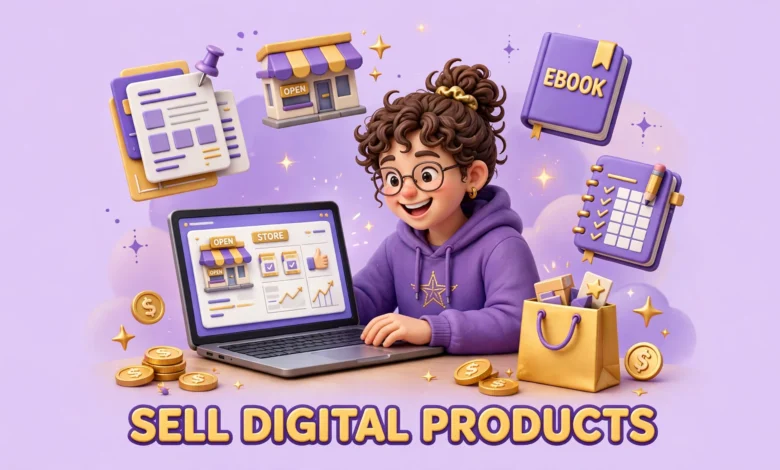
A digital product is any file or resource a buyer can download and use: a template, a printable, a guide, a preset pack, a Notion system, a set of worksheets, or a short course. Unlike physical products, there is no stock, no shipping, and no per sale production cost. That is the genuine advantage. The genuine catch is that nobody buys a product they have never heard of, from a creator they do not yet trust, on a topic they do not care about.
This guide walks through the practical path: pick one small product, check demand before you build it, create an original version, choose a platform that costs little upfront, price it honestly, and launch it to an email list rather than hoping a bio link does the work.
Why Should You Start With One Small Product?
New sellers usually make one of two mistakes: they build a huge course nobody asked for, or they launch five products at once and promote none of them well. One small product avoids both traps. It is faster to finish, easier to price, and simpler to explain in a single sentence. A budget tracker, a set of Instagram caption templates, or a beginner workout plan are all small enough to build in a few weeks and clear enough for a buyer to understand at a glance.
Pick a product that matches content you already make. If your audience follows you for study tips, a study planner fits. If they follow you for photography, a preset pack fits. A product that has nothing to do with your content forces you to find a new audience from scratch, which is the hardest way to start selling.
How Do You Check Demand Before You Build?
Demand checking is the step most creators skip, and it is the step that saves the most wasted effort. Before you build anything, look for proof that people already want this kind of product and are willing to pay for it. You do not need paid tools for this. A few hours of honest research is enough.
- Search Etsy and Gumroad for products like yours. Steady sales, many reviews, and recent listings are signs of real demand, while a marketplace with no similar products may mean nobody wants it, not that you found a gap.
- Read Reddit threads and comments in your niche. Look for repeated questions and complaints, such as “I wish someone made a simple version of this” or “I would pay for a template that does this.”
- Ask your own audience directly. A poll or a short post asking which of two product ideas they would actually buy is worth more than a hundred guesses.
- Check what free content already exists. If excellent free versions cover your whole idea, your paid version needs a clear extra benefit, such as saving hours, looking professional, or working out of the box.
If your research finds no demand, that is useful information, not a reason to push ahead anyway. Change the topic, narrow the audience, or pick a different product idea. Building first and hoping demand appears later is how most first products fail quietly.
How Do You Build an Original Product Buyers Trust?
Originality is not optional here. Never resell someone else’s work, repackage free templates with a new cover, or copy a competitor’s product and change a few words. Buyers notice, platforms remove listings, and your reputation as a creator takes a hit that is hard to repair. Build from your own experience, your own examples, and your own design, even if the format itself is common.
Quality means the product works the moment a buyer opens it. Test every link, every formula, and every page on a fresh device before launch. Write clear instructions at the start of the file, because a buyer who cannot figure out how to use a product in five minutes will ask for a refund, not a tutorial. Include a short example of the finished result so buyers know what success looks like.
Keep the scope honest. A product page should describe exactly what is included, who it is for, and what it will not do. Overpromising creates refunds and bad reviews, while a clear, modest promise builds trust and repeat buyers. If you are still growing your own audience, our guide to grow on Instagram in 30 days can help you build the audience a product launch needs.
Which Platform Should You Use First?
Start with a platform that costs nothing upfront, so you only pay when you actually sell. Monthly fees make sense later, once sales are steady, but paying a monthly fee before your first sale adds pressure and eats into thin early margins. Three common starting options cover most small creators.
- Gumroad charges a 10 percent fee per sale on its free setup, with no monthly cost. It handles payments, delivery, and basic storefront pages, which makes it a simple first home for templates, guides, and printables. See Gumroad for current terms.
- Payhip offers a free plan with a 5 percent fee per sale, plus its own storefront and discount tools. The lower fee leaves you more per sale, though you should still compare payment processing costs on each platform. See Payhip for current terms.
- Stan Store charges a monthly fee instead of a per sale cut, so it usually only makes sense after you have regular sales. Its strength is a clean link in bio storefront, but paying monthly before sales arrive is a cost, not an investment, for a brand new seller.
Pick one platform, list your product properly with a clear title, preview images, and an honest description, and drive all traffic there. Also read each platform’s current fee and payout terms before launch, because fees change and your pricing should reflect the real numbers.
How Should You Price a First Digital Product?
Price follows value and audience size, not effort alone. A product you spent a month building is not automatically worth fifty dollars if it solves a small problem for a small audience. For a first product, a low to mid price usually works better than a high one, because it lowers the trust barrier for buyers who do not know you yet. Typical first product prices for small creators range from a few dollars for a simple printable or template to around twenty or thirty dollars for a fuller guide or system.
- Price for the result, not the page count. A ten page template that saves a buyer three hours is worth more than a hundred page guide nobody finishes.
- Check what similar products charge, then position honestly. Far below the market can look low quality, while far above it needs proof you do not yet have.
- Offer a clear entry option. A small, useful product at a low price lets buyers test you before they ever consider a bigger purchase.
- Leave room for discounts. Launch pricing, bundles, and seasonal sales all need margin, so do not price so low that a discount wipes out your earnings.
If you also sell services such as content or freelance work, pricing discipline matters there too. Our guide on how to price UGC content in 2026 covers how to charge for creative work without undercutting yourself, and the same principle applies to products: a price should reflect the value delivered, not your fear of charging.
Why Should You Launch to an Email List, Not Just a Bio Link?
A bio link alone is a weak launch plan. Social media shows your post to a fraction of your followers, and that fraction shrinks further if the post contains a sales link. An email list is different: you own the contact, the message lands in an inbox, and you can explain the product properly instead of squeezing it into a caption.
You do not need a large list. A hundred people who chose to hear from you will outperform ten thousand casual followers who scroll past. Start collecting emails before launch with a free sample related to the product, such as one free template from a pack of ten, or the first chapter of a guide. That free sample also proves your quality before anyone pays.
Plan a simple launch sequence: one email announcing the product and the problem it solves, one email showing the inside of the product or a buyer example, and one final email before a launch discount ends. Three honest emails beat thirty hype posts. Keep every claim truthful, and never invent scarcity, such as fake limited stock on a digital file that can be copied endlessly.
What Are the Honest Caveats About Selling Digital Products?
The biggest caveat is traffic. Creating the product is often the easiest part. Getting enough of the right people to see it, trust you, and buy takes months of consistent content, and that work continues after launch. Creators who expect passive income overnight usually quit at the exact point where steady promotion would have started working.
Sales are also uneven. A launch week may sell well, then sales may drop to near zero until your next promotion. That feast or famine pattern is normal for small creators, and it is why a product should support your income, not replace it entirely at first. Keep creating content, keep collecting emails, and promote the product regularly in ways that help non buyers too, such as free tips drawn from it.
Finally, protect your work and your buyers: use a platform with secure delivery, answer questions promptly, and fix genuine problems quickly. Our guide to make money as a small creator in 2026 puts product sales alongside other income streams. One good product, sold honestly to the right audience, is a solid start.
Frequently Asked Questions
Can a small creator sell digital products with a tiny audience?
Yes, if the product matches the audience you do have. A small, focused audience that trusts you will buy more readily than a large, general one. Start with one low priced product, prove its value with a free sample, and grow the audience alongside the product.
What is the best platform for a first digital product?
A free plan platform such as Gumroad or Payhip is usually best for a first product, because you pay a percentage only when you sell. Monthly fee storefronts make more sense once sales are regular enough to cover the fee comfortably.
How much should I charge for my first digital product?
Most first products for small creators fall in a low to mid range, from a few dollars for a simple template or printable to around twenty or thirty dollars for a fuller guide or system. Price for the result the buyer gets, check similar products, and leave room for launch discounts.
Is selling digital products really passive income?
Not at first, and rarely fully. There is no production or shipping cost per sale, but you still need traffic, promotion, customer support, and updates. Income becomes steadier over time as your audience and catalogue grow, but it is earned income with ongoing work attached.
Last updated: October 2026.