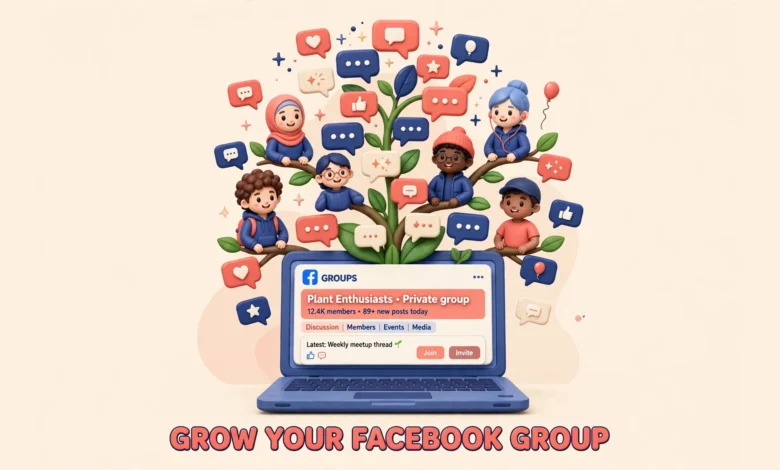
A Facebook Page gives you reach, but a Facebook Group gives you a community that talks back. On a Page, most followers scroll past and never return. In a good group, the same people show up daily, answer each other, and share wins and questions. A group turns casual followers into regulars, and regulars into customers and superfans.
Growing a group is slower than growing a Page, and that is the first honest truth in this guide. There is no viral shortcut here. A group grows when the room is worth joining, the conversation is worth returning to, and the right people keep hearing about it from places they already trust.
Why Facebook Groups Still Work for Creators in 2026
Facebook Groups work because they are built around belonging, not broadcasting. People join because a group promises a specific kind of help, a shared interest, or a room full of people like them. When that promise is kept, members check in daily. A Page post competes with every other Page in the feed, while a group post lands in front of people who chose to be there.
A group also gives you direct access to your most engaged audience. You can poll them before a launch, test an idea in an afternoon, and learn the exact words they use to describe their problems. If you run a community elsewhere too, our guide on how to grow a Discord community as a creator covers a similar playbook for a chat-first audience.
Get the Fundamentals Right Before You Promote
The biggest mistake new group owners make is promoting an empty room. Nobody joins a group with three posts and two members, because there is nothing to see and nobody to talk to. Get the fundamentals right before you invite a single person, and your early members will stay instead of quietly leaving.
Start with a clear and specific purpose. A group for everyone is a group for nobody. Decide exactly who the group is for and what they get from it, then say it plainly. A group for beginner food photographers who want honest feedback is far stronger than a group for creators in general.
Next, write your group name and description for Facebook search. Many members find groups by searching, so include the words your ideal member would actually type. Explain who should join, what kind of posts they will find, and what is not allowed.
Set rules that protect quality from day one, keep them short and specific, and enforce them kindly. Ban spam, self promotion without permission, and rude behaviour. Then pin a welcome post: greet new members, restate the purpose, link to the rules, and ask a simple question, such as what they are working on right now.
Finally, publish at least 20 to 30 posts before you start promoting. Mix useful tips, questions, resources, and a few personal posts so the feed looks lived in. When a new member lands in a group with real content already there, they can learn something and join a conversation on their first visit.
What the Facebook Group Algorithm Actually Rewards
Facebook’s group algorithm rewards content that generates conversation, not passive reactions. A post with 200 likes and two comments is weaker than a post with 20 thoughtful comments. Replies to comments count even more, since they show a real back and forth. Design every post to earn a reply.
End most posts with a clear, easy question, and reply to the early answers quickly. Your own replies keep the thread alive and show members that the admin is present. A steady rhythm helps too: two or three good posts a day beats a flood of low effort ones, and a simple content calendar for creators can help you plan that rhythm a week ahead.
Post Formats That Start Real Conversations
Some formats reliably start conversations, while others reliably get ignored. The winners all have one thing in common: they ask members to share something, choose something, or help solve something. Use them in rotation so the group never feels repetitive.
- Simple debatable questions: ask for an opinion where both answers are reasonable, such as whether beginners should post daily or three times a week.
- Polls: voting takes one tap, so polls lower the barrier to participating. Ask voters to explain their pick in the comments.
- Useful resources with a context prompt: share a template or tutorial, then ask members how they would use it or what they would add.
- Problems members help solve: post a real problem and invite the group to solve it together. Helping someone is the fastest way to feel part of a community.
- Wins and introductions: invite members to share a small win or a new project. It gives quiet members a low pressure way to speak up.
Rotate these formats across the week. Watch which ones earn the most comments, then do more of those and less of the rest.
Best Times to Post in a Facebook Group
The best posting times for groups are generally Tuesday to Thursday, late morning to early afternoon in your audience’s timezone. That is when many people take a break, check their phone, and have a few minutes to reply. Monday mornings are busy, and Friday afternoons are quieter for work focused groups, though hobby groups often peak on weekend evenings. Use this as a starting point, then check Group Insights for when your own members are online.
How to Grow Your Group: Promotion That Works
Once the foundation is solid, promotion means reaching people who already trust you somewhere else. Cross-promote from your Facebook Page, your email list, and your email signature. Explain the benefit in one sentence: what will they get inside the group that they cannot get on the Page? Invite Page followers directly, in small batches, so the welcome post stays busy.
If you have an email list, even a small one, a single email invite can bring in more engaged members than weeks of social posts. Join 5 to 10 groups in your niche and contribute genuine value there for weeks before you ever mention your own group. When people notice you, they will check your profile, and that is where a clear link to your group belongs. Never drop your link uninvited in someone else’s group: it annoys admins and gets you removed.
Collaborate with other group admins in related niches. A joint live session, a shared challenge, or a simple cross mention introduces your group to an audience that already likes groups. Also make your group easy to find: share the link on your website, in your link in bio page, and in your Page’s about section.
Themed Days, Live Sessions, and Member Spotlights
Regular events turn a group from a feed into a habit. Themed days give members a reason to return on a specific day: a Monday goal thread, a Wednesday question thread, a Friday win thread, or a weekend resource share. Keep the themes simple and repeat them weekly, so members learn the rhythm.
Weekly live Q and A sessions are one of the strongest growth tools a group has. A short live video, even 20 minutes, creates a shared moment that a text post cannot match. Promote the live a day ahead, collect questions in a post, and start on time. Regularity matters more than production quality: a simple phone live every Thursday beats a polished live once every two months.
Celebrate milestones and spotlight top members often. When the group reaches 100, 500, or 1,000 members, mark it with a post and thank the people who helped. Spotlight a member each week and invite them to answer questions. Use Group Insights weekly to see which posts got the most comments and who your top contributors are.
How to Monetize a Facebook Group Without Killing It
A group can earn money, but only if the members trust you first. Follow the 80/20 rule: 80 percent free useful content and 20 percent promotional content at most. When four out of five posts help members for free, the occasional offer feels fair. When half your posts sell something, members stop reading and start leaving.
Start with the lightest options. Affiliate links to tools you genuinely use can earn a small income when you recommend them in context, with a clear note that the link is an affiliate link. Digital products fit groups well too: a template, a checklist, a short course, or a guide that solves the exact problem your group talks about every week.
A paid membership tier is the most sustainable option for a large, active group. Decide what paying members get that free members do not: extra live sessions, a private subgroup, templates, or early access. Keep the free group genuinely useful, so the paid tier feels like an upgrade. If you are considering this route, our guide on how to start a paid community as a creator walks through pricing and the mistakes to avoid. Brand deals can work too, with full disclosure. Our 30 day plan to grow on Instagram shows how a group fits into a larger strategy.
Honest Caveats: What Growth Really Looks Like
Most niche groups take 6 to 12 months to reach 1,000 members, and that is normal. A focused group will grow steadily rather than explosively, so do not compare your first month with someone else’s third year. Judge your group by the quality of the conversation, not only by the member count. One thing can compress the timeline a lot: a single email invite to an existing list can bring in dozens of engaged members in a day. For a balanced view in practice, see the guide at Multilogin on how to grow a Facebook group and the effort ranked approach at Lilach Bullock on growing a Facebook group organically.
Be careful about who you invite. Inviting people who never participate hurts the group, because disengagement sends a negative signal to the algorithm. Facebook sees a growing member count with flat activity and shows the group’s posts to fewer people. It is far better to have 300 active members than 3,000 silent ones. Never buy members or spam other groups with your link. Bought members do not comment or buy, and spamming gets you removed and can get your account restricted. Slow, honest growth is the only kind that lasts.
Frequently Asked Questions
How long does it take to grow a Facebook group to 1,000 members?
Most niche groups take 6 to 12 months to reach 1,000 members. Growth is faster if you already have an audience on a Page, a channel, or an email list. Focus on conversation quality in the early months, because an active small group grows more reliably than a quiet large one.
What should I post in a Facebook group to get more engagement?
Post formats that invite replies: simple debatable questions, polls, useful resources with a context prompt, and problems members help solve. End most posts with a clear question and reply to the early answers quickly. Avoid posts that only ask for a like, because passive reactions do little for your reach.
How do I promote my Facebook group without spamming?
Promote from places you already own first: your Page, your email list, your signature, and your other channels. Join 5 to 10 groups in your niche and contribute genuine value for weeks before mentioning your own group, and collaborate with other admins on joint lives or challenges. Never drop your link uninvited in someone else’s group.
Can I make money from a Facebook group?
Yes, if you protect trust first. Follow the 80/20 rule: 80 percent free useful content and 20 percent promotional content at most. Options include affiliate links, digital products such as templates or short courses, brand deals with full disclosure, and a paid membership tier.
Last updated: November 2026.