


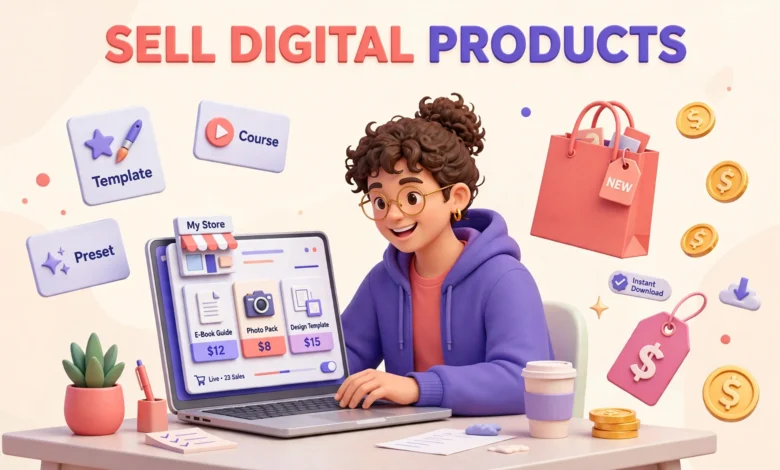
Selling digital products is the creator economy promise everyone has heard: build something once, sell it forever, and wake up to sales while you sleep. The promise is not false, but the timeline is. Most successful sellers spent months building an audience and validating an idea before they earned anything worth mentioning. The product itself is the easy part. The hard part is making something people actually want to buy.
That is good news, because it means you do not need a huge following, a fancy website, or a big budget to start. You need a clear audience, a specific problem you can solve, and a product that solves it in a format people can use immediately. This guide walks through that process: choosing what to sell, validating demand, pricing it, picking a platform, and marketing it without feeling like a salesperson.
What Digital Products Actually Sell in 2026?
The best selling digital products share one trait: they save the buyer time or solve a specific problem today. A generic ebook about success does neither. A template that helps a small business owner plan a month of Instagram posts in one hour does both.
- Templates: Notion templates, Canva templates, spreadsheets, resumes, media kits, and content calendars. The highest volume category for small creators, because buyers can use them immediately.
- Presets and filters: Lightroom presets, photo filters, and video color grades. A strong fit if you post photography or video and your audience asks how you edit.
- Ebooks and guides: short, practical guides on a narrow topic, like a 40 page guide to growing on TikTok as a beginner. They work best when the topic matches the content you already make.
- Printables: planners, wall art, worksheets, and trackers sold as downloadable files. Popular on Etsy, and a good fit if your audience likes products they print at home.
- Online courses and workshops: the highest price point and the most work. Start here only if you have already proven the topic with a smaller product or a free workshop.
- Digital tools and resources: icon packs, font bundles, sound packs, and stock assets. A good fit for designers and editors whose audience is other creators.
If you are unsure which category fits you, look at what your audience already asks you for. The questions in your comments and DMs are a product roadmap. When ten people ask for your Notion setup, that is a template. When twenty people ask how you edit your videos, that is a preset pack.
How Do You Validate Demand Before Building?
The biggest mistake new creators make is building a product nobody asked for, then wondering why it does not sell. Validation means proving people will pay before you spend weeks building. It takes days, not months.
The simplest validation method is a pre-sell. Announce the product, describe what it includes, set a price, and open a waitlist or take early orders before it exists. If twenty people join the waitlist or a handful pay early, you have demand. If nobody signs up, the idea needs rethinking, not more work.
A second method is the audience question. Post a poll or a simple question: which of these two products would you buy, and what would you pay for it? The answers tell you both the winning idea and a rough price range. A third method is the minimum version: build the smallest useful version in a weekend, sell it cheap, and let buyer feedback shape the full version.
Watch out for polite lies. Friends saying ‘I would totally buy that’ is not validation. Money is validation. A waitlist signup is weak validation. An actual purchase, even a pre-order at a discount, is real validation.
Which Platform Should You Sell On?
Your platform choice decides your fees, your payout options, and how much control you have over the customer relationship. There is no single best platform, only a best one for your product type and audience size. Here is how the main options compare.
- Gumroad: the simplest starting point for most creators. It charges 10 percent plus 0.50 dollars per sale, handles payments and delivery, and lets you build a storefront in minutes. Best for templates, ebooks, and presets. Learn more at gumroad.com.
- Etsy: a marketplace with built-in search traffic, which matters if you have no audience yet. It charges 6.5 percent per transaction plus a small listing fee, and it works best for printables, planners, and digital art. Learn more at etsy.com.
- Payhip: a flexible storefront with lower fees than Gumroad on its free plan and a built-in affiliate system. A good middle ground if you want more control without paying a monthly fee.
- Lemon Squeezy: handles tax compliance and payouts for you, which is useful if you sell internationally. Its fees are higher than Payhip, but the tax handling saves real headaches.
- Ko-fi: lets you sell digital products alongside tips and memberships with zero platform fees on the free plan. Best if you have a small loyal audience and want a simple shop without monthly costs.
Two practical warnings. First, read the payout options before you commit. If you are based in Pakistan or another country where PayPal is unavailable, check that the platform pays through Payoneer, Wise, or direct bank transfer. A platform with great fees is useless if you cannot withdraw your money. Second, never build your entire business on a marketplace you do not control. Your email list is the one asset no platform can take away.
How Should You Price Your First Product?
Pricing is where most first time sellers get stuck. Price too high and nobody buys. Price too low and you earn almost nothing for real work, while signaling that the product is not worth much. Both mistakes are fixable, but raising a price later is always harder than lowering one.
A useful starting range for a first product is 9 to 29 dollars. Templates and presets usually sit at the lower end, while a detailed guide or a bundle of several templates can sit at the higher end. Courses start higher, usually 49 dollars and up, but only after the topic is proven with a cheaper product.
Three pricing principles work for almost every creator. First, price for the outcome, not the page count. A 15 page template that saves someone five hours a week is worth more than a 100 page ebook they will never finish. Second, use anchor pricing: offer a basic version at one price and a bundle with extras at a higher price. Third, test your price. Launch at your best guess, watch conversions for two weeks, and adjust once.
How Do You Market a Digital Product Without Being Annoying?
Here is the uncomfortable truth: the product is maybe 30 percent of the work, and marketing is the other 70 percent. A great product with no marketing sells nothing. A decent product with consistent marketing sells every week. You are showing people the problem it solves, using the same content skills you already have.
Your email list converts better than any other channel. Social media reach is rented and unpredictable, but an email goes directly to someone who already said they want to hear from you. Even a list of 200 people beats 20,000 followers for sales, because the list is full of people who chose to stay close. Start collecting emails from day one with a free lead magnet, like a sample template or a short checklist.
Social proof is the second most powerful tool. Every time a buyer leaves a good review, shares a result, or sends a message saying the product helped, save it and share it with permission. Screenshots of real results beat any sales copy you could write. If you have no buyers yet, give the product free to five people in your niche in exchange for honest feedback and a testimonial.
Content marketing is the third pillar, and it is the one most creators already know how to do. Make free content that solves a small piece of the problem your product solves completely. A free tutorial that helps someone plan one week of content naturally leads to a paid template that plans a whole month. This is the same growth thinking behind our guide on how to grow on Instagram in 30 days: help first, sell second.
What Are the Honest Caveats Nobody Mentions?
Passive income is the most oversold phrase in the creator economy. Digital products do earn while you sleep, but only after months of active work: building the audience, making the product, and marketing it every week. The income becomes passive gradually, not on launch day.
Most first products sell slowly. That is normal, not a sign that you failed. A first product that sells 20 copies in its first month is a success, because it proves the idea and gives you testimonials. Creators who make real money from digital products usually have three or four products, and the later ones outsell the first because the audience is already in place. The same pattern shows up in our guide on how to make money as a small creator: the first attempt is the tuition, not the payday.
There is also real admin work. You will answer customer emails, fix broken download links, handle refund requests, and update the product when tools change. Budget an hour or two a month for maintenance per product.
Finally, protect yourself from platform risk and tax surprises. Keep copies of your product files and your customer list outside the platform you sell on, so a suspension does not wipe out your business. Check the tax rules for your country early.
Your First Product Plan in Five Steps
If you want a simple starting plan, here it is. Week one, listen to your audience and pick one specific problem they keep mentioning. Week two, validate it with a pre-sell or a waitlist and set a price in the 9 to 29 dollar range. Week three, build the smallest useful version and give it to five people for honest feedback. Week four, launch it to your audience and your email list with a short launch discount.
That plan is not glamorous, and it will not make you rich in a month. It will, however, give you a real product, real buyers, and real data about what your audience pays for. The creators who build lasting income from digital products are not the ones with the flashiest launch. They are the ones who shipped a small honest product, listened to their buyers, and did it again, better.
FAQs About Selling Digital Products as a Creator
Do I need a large following to sell digital products?
No, you need a small audience that trusts you, not a large one that ignores you. Creators with a few hundred engaged followers regularly outsell creators with tens of thousands of passive followers, because sales come from trust and relevance, not reach.
What is the best platform for a first digital product?
For most beginners, Gumroad is the easiest starting point because setup takes minutes and there is no monthly fee, while Etsy is better if you have no audience yet and want built-in search traffic for printables. Compare fees and payout options for your country before you choose.
How much money can a small creator make from digital products?
A realistic first product earns a few hundred dollars in its first few months, not thousands. Income grows as you add products, grow your email list, and build a reputation, with many small creators reaching a few hundred dollars a month after a year of consistent work.
Can I sell digital products from Pakistan?
Yes, but check payout options carefully, because PayPal is not available in Pakistan. Gumroad, Payhip, and Lemon Squeezy support Payoneer or Wise payouts in many cases, so confirm the payout method for your country during setup.
Last updated: November 2026.




One Comment